
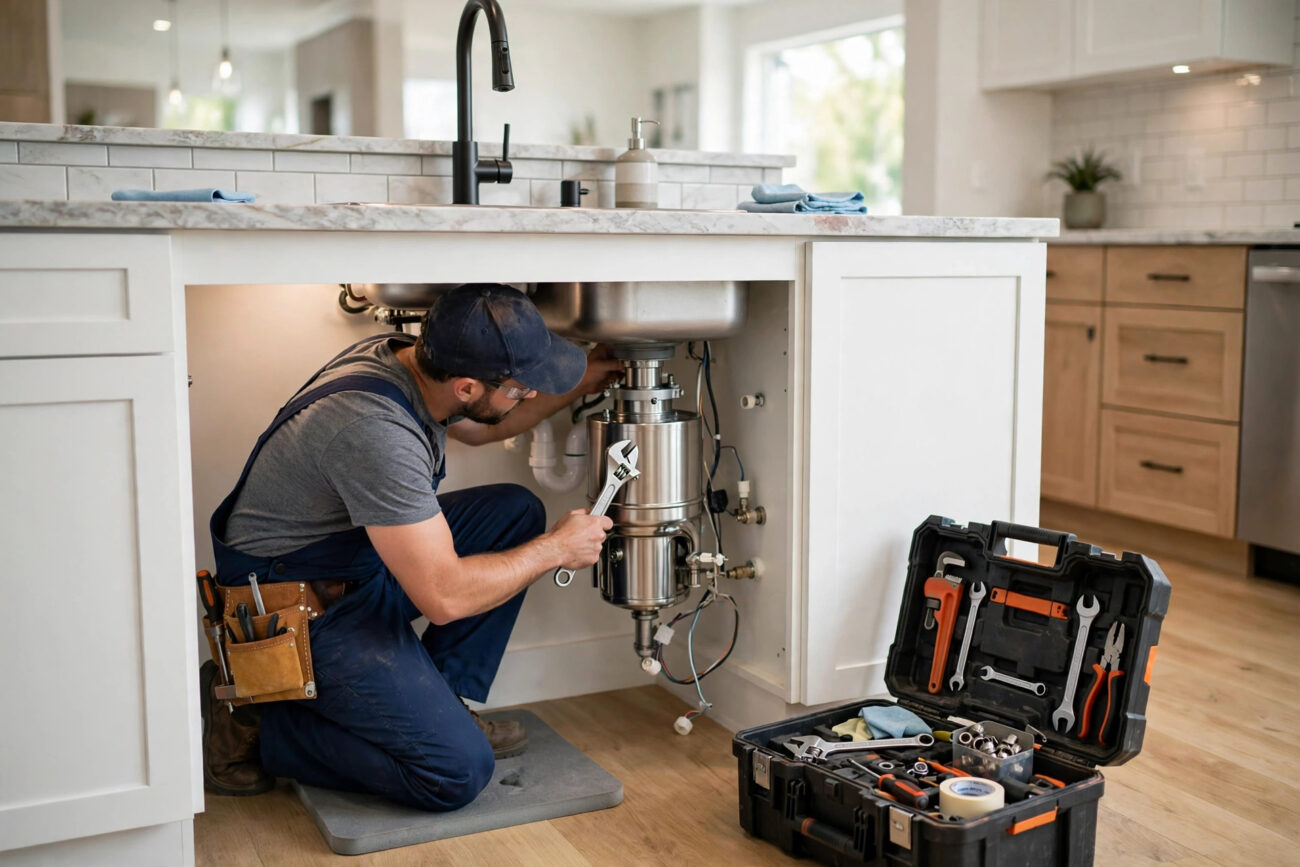
You flip the switch, and instead of the usual hum you hear a buzz, a click, or nothing at all. A dead garbage disposal turns the kitchen sink into a chore, and the first question most homeowners ask is simple: how much does it cost to replace a garbage disposal? In 2026, a professional replacement typically costs $200 to $625, with the national average near $550. A confident do-it-yourselfer can do a like-for-like swap for as little as $75 in parts. This guide breaks down what you will pay by motor size and unit type, what labor costs, when repair beats replacement, and how to avoid overpaying.
You will also learn the signs that your disposal is truly finished, how long a replacement takes, and which upgrades are worth the money, so you can get a fair quote and a quieter kitchen.
Garbage Disposal Replacement Cost at a Glance
According to Angi’s 2026 cost guide, updated in October 2026, professional garbage disposal replacement costs between $200 and $625, with the average project running around $550. Other 2026 guides put the typical range at $150 to $950, with most jobs landing near $350 to $510 depending on the unit and the region. The wide range is normal: a basic 1/3 horsepower unit in a small town costs far less than a premium 1 horsepower quiet model installed in a big city.
The total has two parts: the unit itself, which usually costs $50 to $400, and labor, which usually runs $50 to $100 per hour. Most replacements take about an hour, because the plumber removes the old unit, fits the new mounting assembly, connects the drain and the power, and tests for leaks. A first-time installation costs more, because it may need new plumbing, a new electrical outlet, or a dedicated circuit.
Garbage Disposal Cost by Motor Size
Motor size, measured in horsepower, is the biggest driver of the unit price. A stronger motor grinds tougher waste, jams less often, and usually lasts longer, but it costs more up front.
| Motor size | Unit price only | Installed cost (typical) | Best for |
|---|---|---|---|
| 1/3 HP | $50 to $100 | $150 to $250 | Singles or couples, light use, soft food waste |
| 1/2 HP | $75 to $225 | $200 to $400 | Small families, everyday use, the most common choice |
| 3/4 HP | $150 to $280 | $300 to $550 | Families, frequent cooking, tougher scraps |
| 1 HP and above | $250 to $400+ | $450 to $700+ | Large households, heavy use, quietest operation |
For most households, a 1/2 or 3/4 horsepower model is the sweet spot. A 1/3 horsepower unit is cheap, but it jams more easily and struggles with fibrous foods like celery or potato peels. A 1 horsepower premium unit grinds almost anything and runs quietly, but it is more than most kitchens need. Stainless steel grinding components, found on mid-range and premium models, resist rust and last longer than galvanized parts.
Garbage Disposal Cost by Unit Type
Beyond motor size, the type of disposal changes the price. The two main types work very differently.
Continuous feed models are the standard in American kitchens. You switch them on, drop waste in, and let them grind while water runs. They cost $75 to $1,000 depending on motor size and features, and most installed jobs fall in the $200 to $625 range. They are convenient, but you must keep hands and utensils well clear while they run.
Batch feed models only run when the stopper is locked in place, which makes them safer around children. They typically cost $50 to $100 more than a comparable continuous feed model, and they grind in small batches, so a big cleanup takes longer.
Premium features also add cost. Sound insulation, often marketed as quiet technology, can add $50 to $150. Multi-stage grinding, which grinds waste finer and helps prevent clogs, appears on mid-range and premium models. Auto-reverse, which clears small jams by briefly reversing the grinding plate, is a useful feature if your household puts a lot down the drain. A longer warranty, up to 10 years on some premium models, is worth weighing against the price difference.
Labor Cost to Replace a Garbage Disposal
Labor is the second half of the bill. Plumbers typically charge $50 to $100 per hour, and most replacements take about an hour. In major cities such as New York, Los Angeles, Chicago, and San Francisco, rates often run $80 to $130 per hour, which is why the same job costs more there.
A straightforward swap, where the new unit matches the old mounting and the wiring is already in place, is the cheapest job. Costs rise when the plumber must adapt the drain pipes to a different sized unit, replace a worn mounting assembly, or add a new electrical outlet. If your kitchen has no grounded outlet for the disposal, a licensed electrician may charge $120 to $165 to install one, and a first-time installation that needs a new dedicated circuit from the panel can add $150 to $500.
Removing and disposing of the old unit usually costs $25 to $100, and many plumbers include it in the quote rather than charging separately. Home improvement stores such as Home Depot and Lowe’s offer installation for disposals bought in store, typically charging $120 to $200 for labor. Always get the quote in writing, and check whether it includes the unit, the mounting hardware, the drain connections, leak testing, and old unit removal, so you are comparing like with like.
What Affects the Final Price?
Six factors explain most of the difference between a $200 job and a $700 one.
1. The unit you choose. Brand, horsepower, and features set the parts cost. InSinkErator, Moen, and Waste King are the most common brands, with InSinkErator units typically running $100 to $400.
2. Replacement vs first-time install. Replacing an existing unit is the simplest job, because the plumbing connection and the outlet already exist. A first-time install needs new drain work and possibly new wiring, and typically costs $250 to $650 all in.
3. Your location. Labor rates and material costs vary by region, and big-city jobs cost more.
4. Electrical work. A new outlet or a dedicated circuit adds $120 to $500, and it needs an electrician, not just a plumber.
5. Plumbing changes. If the new unit is deeper or wider than the old one, the drain pipes may need rework, which adds time and parts.
6. Old unit condition. A disposal that has leaked for months can damage the cabinet floor or the drain trap, and that repair adds to the bill. Fixing a leak early is almost always cheaper than replacing a rotted cabinet base later.
Repair or Replace: Which Makes Sense?
Not every broken disposal needs replacing. A jammed disposal can often be freed in minutes with an Allen wrench in the socket on the bottom of the unit, and a tripped reset button, the small red button on the bottom, fixes many dead units. A simple repair usually costs $120 to $350, depending on the problem.
Replacement is the better call when the motor is burned out, the unit leaks from the body itself, or the disposal is more than 8 to 10 years old. Most disposals last 8 to 15 years, and an old unit that needs its second repair in a year is telling you it is finished. A new unit also brings a fresh warranty, quieter operation, and better grinding, which an old repaired unit cannot match.
As a rule of thumb, if the repair costs more than half the price of a new unit, replace it. If the unit is young and the fix is small, repair it and keep the money.
DIY vs Professional Replacement
A like-for-like swap is one of the more approachable plumbing jobs, and many confident homeowners do it themselves. A budget DIY replacement costs $50 to $120 for the unit plus basic supplies, and a mid-range DIY job runs $100 to $250. The work involves turning off the power, disconnecting the drain and the dishwasher hose, unmounting the old unit, fitting the new mounting ring, and reconnecting everything before testing for leaks.
Do it yourself only when the new unit matches the old one, the wiring is a simple plug-in connection, and you are comfortable working under a sink with the power off. Call a professional when the job needs new wiring, a new circuit, drain rework, or a hardwired connection instead of a plug. A plumber also guarantees the work, so a leak that appears a week later is their problem, not yours. If you are unsure, paying $100 to $250 for labor is cheaper than paying for water damage in the cabinet below.
Whichever route you take, never put your hand inside a disposal, even when it is switched off. Use tongs or pliers to remove anything stuck, and always cut the power at the breaker before working on it.
How to Save Money on Replacement
Buy the unit yourself and pay for labor only. Plumbers mark up parts, so buying the same model online or at a home improvement store and hiring a plumber for the installation, usually $100 to $250 for labor, is often the best value.
Get two or three quotes for a professional job, and make sure each one lists the same unit, so the comparison is honest. Avoid the cheapest quote if it excludes the mounting assembly, the drain connections, or old unit removal, because those extras will appear on the final bill.
Choose the right size the first time. A 1/2 horsepower unit is enough for most homes, and paying for a premium 1 horsepower model you do not need wastes money. On the other hand, buying the cheapest 1/3 horsepower unit and replacing it again in three years costs more than buying the mid-range model once.
Finally, protect the new unit. Run cold water before, during, and after grinding, feed waste in small amounts, and never put grease, coffee grounds, pasta, rice, or fibrous vegetables down the drain. A little care adds years to the life of the disposal.
Signs You Need a New Garbage Disposal
Watch for these warnings. Frequent resets, where the unit keeps tripping its reset button, usually mean the motor is failing. Grinding that sounds slower, louder, or metallic often means worn blades or a dying motor. Water leaking from the body of the unit, rather than from a loose connection, cannot be fixed and means replacement. Persistent bad smells that survive cleaning usually mean trapped food in worn internal parts. And if the unit is over ten years old and needs frequent attention, a new one will be cheaper than another year of repairs.
Frequently Asked Questions
How much does it cost to replace a garbage disposal?
A professional replacement typically costs $200 to $625 in 2026, with the national average near $550. Most jobs fall in that range, while premium units in high-cost cities can reach $950. A DIY like-for-like swap costs as little as $75 in parts.
How long does it take to replace a garbage disposal?
Most replacements take about an hour for a professional, including removing the old unit, fitting the new mounting assembly, connecting the drain and power, and testing for leaks. A first-time installation takes longer, usually two to three hours, especially if new wiring or drain work is needed.
Can I replace a garbage disposal myself?
Yes, if it is a like-for-like swap with a plug-in power connection and you are comfortable working under the sink with the power off. A DIY replacement costs $50 to $250 in parts. Call a professional if the job needs new wiring, a new circuit, or drain rework, or if the unit is hardwired rather than plug-in.
What size garbage disposal do I need?
A 1/2 horsepower model suits most households and is the most common choice. Choose 1/3 horsepower only for light use by one or two people, 3/4 horsepower for a family that cooks often, and 1 horsepower for a large household or heavy use. A stronger motor jams less and usually lasts longer.
How long does a garbage disposal last?
Most garbage disposals last 8 to 15 years, depending on use and care. Units that grind fibrous foods, grease, or hard objects wear out faster. Running cold water during use, feeding waste slowly, and keeping grease out of the drain all help a disposal reach the long end of that range.
Is it worth repairing a garbage disposal or should I replace it?
Repair it when the unit is young and the fix is small, such as a jam or a tripped reset button. A repair usually costs $120 to $350. Replace it when the motor is burned out, the body leaks, or the unit is over 8 to 10 years old. If the repair costs more than half the price of a new unit, replacement is the better deal.
Conclusion
Replacing a garbage disposal costs $200 to $625 for most professional jobs in 2026, with the national average near $550, and as little as $75 if you do a simple swap yourself. The unit price depends on motor size, the labor depends on your area and whether new wiring or plumbing is needed, and the smartest move is usually a mid-range 1/2 or 3/4 horsepower model with a good warranty. If your disposal is old, leaking, or failing often, replace it now. A new unit is quieter, grinds better, and costs less than the water damage a leaking disposal can cause.
For more on keeping the systems in your home running well, see our guide to how Piedmont Natural Gas is powering homes and businesses more efficiently, which covers home energy and utility costs.
