
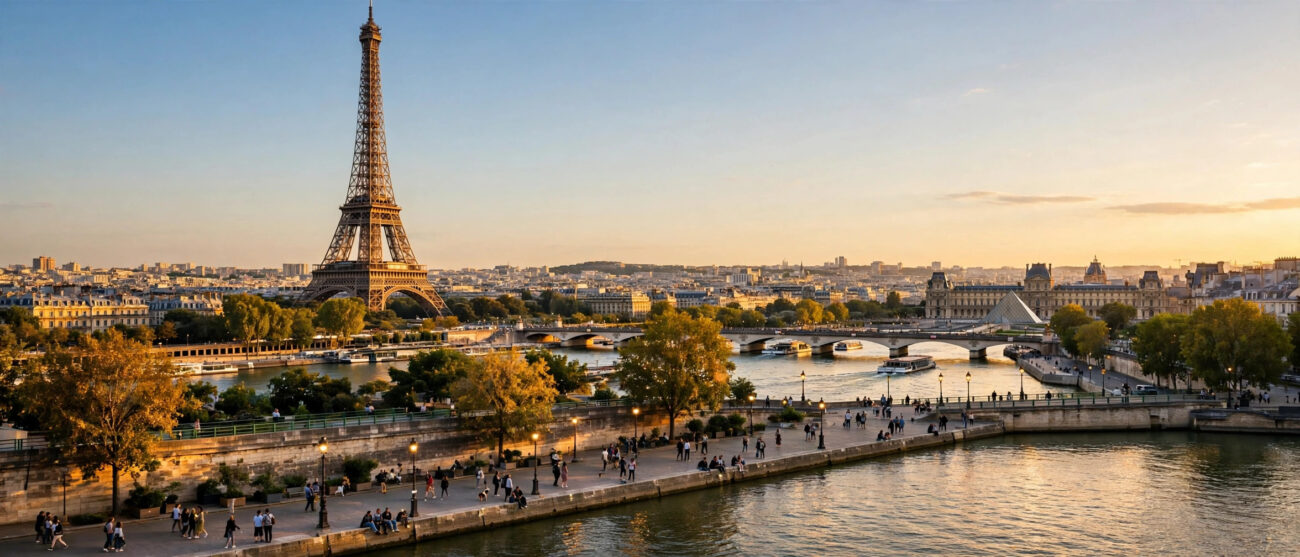
Paris rewards travellers who plan a little and rush a little less. The top tourist attractions in Paris are famous for good reason, but the difference between a good trip and a great one is usually timing, booking, and grouping nearby sights together. This guide covers the places first-time visitors should not miss, what each one is really like, how long to allow, and what it typically costs.
Quick answer: Start with the Eiffel Tower, the Louvre, Notre-Dame, Sacré-Cœur and Montmartre, the Arc de Triomphe, the Musée d’Orsay, and a Seine river cruise. Add the Palace of Versailles as a day trip if you have four or five days. Book the Eiffel Tower, the Louvre, and Versailles online in advance, because all three use timed entry and sell out in peak season.
Top Tourist Attractions in Paris at a Glance
Paris is spread across 20 districts, called arrondissements, so location matters as much as fame. Group nearby sights on the same day: Notre-Dame, Sainte-Chapelle, and the Louvre in the centre; the Eiffel Tower, the Trocadéro, and the Arc de Triomphe on another day; Montmartre on a slow morning of its own. Most first-time visitors need three to five days.
| Attraction | Time to Allow | Typical Cost | Book Ahead? |
|---|---|---|---|
| Eiffel Tower | 1.5–2 hours | About €15–€37 | Yes |
| Louvre Museum | 3 hours minimum | About €22–€32 | Yes |
| Notre-Dame Cathedral | 45 minutes–1 hour | Free to enter | Slot recommended |
| Sacré-Cœur and Montmartre | Half a day | Free; dome about €8 | No |
| Arc de Triomphe | 45 minutes–1 hour | About €16 | Recommended |
| Musée d’Orsay | 2–3 hours | About €16 | Yes |
| Seine River Cruise | About 1 hour | About €17–€20 | Recommended |
| Palace of Versailles | Full day | About €25–€35 | Yes |
Prices are typical ranges observed in October 2026 and change often, so check the official site before you book.
Eiffel Tower
The Eiffel Tower is still the number one tourist attraction in Paris. Built for the 1889 World’s Fair, the iron tower was meant to be temporary. More than a century later, it defines the city skyline.
The main choice is the second floor or the summit. The second floor, at 116 metres, is where Paris actually looks like Paris: you can pick out the Seine, the Arc de Triomphe, and Sacré-Cœur on its hill. The summit, at 276 metres, is higher, but the city flattens into a map from up there. If it is your only visit, book the summit. Otherwise, the second floor at sunset is often better.
Book a timed slot as soon as your dates are fixed, because summit slots sell out first in summer. Since September 2026, even stairs tickets need advance booking. Arrive about 30 minutes early for security and carry a layer, even in July.
Louvre Museum
The Louvre is the world’s most visited museum, with more than 35,000 works on display. The mistake is trying to see a fair share of them. Pick three things you genuinely want to see, find them on the map before you arrive, and treat anything else as a bonus. For most people, that means the Mona Lisa, the Winged Victory of Samothrace, and the Venus de Milo.
Go straight to the Mona Lisa when you get in, because the room only gets fuller during the day. Before you leave, turn around: on the opposite wall hangs Veronese’s The Wedding at Cana, the largest painting in the museum. Use the Carrousel du Louvre entrance under the shopping arcade rather than the glass pyramid, which usually has the longest line. Allow at least three hours. The Louvre is closed on Tuesdays.
Notre-Dame and Île de la Cité
Notre-Dame reopened in December 2024 after the 2019 fire, and it is free to enter. A free time slot is recommended, and the tower climb is paid and by reservation only. The cathedral alone takes 45 minutes to an hour, but the island around it deserves more time.
Île de la Cité is the historic heart of Paris. Walk from Notre-Dame to Sainte-Chapelle, a small Gothic chapel famous for its tall stained-glass windows. Pair this stop with a walk along the Seine quays and through the Latin Quarter, across the river on the Left Bank. This is a good first morning: central, mostly free, and a gentle introduction to the trip.
Sacré-Cœur and Montmartre
Montmartre is the part of Paris that feels most like a village. It works best on foot, over a slow morning, before the tour groups arrive. Start at Abbesses metro station, it is very deep, so take the lift, then wander uphill past the Wall of Love, the pink-walled café La Maison Rose, and Place du Tertre, where portrait artists set up their easels. Finish at Sacré-Cœur, whose steps look out over the whole city.
The basilica is free to enter. Climbing the dome costs a small fee and gives you one of the best panoramic views in Paris. If you would rather skip the climb, the funicular from near Anvers station costs a single metro ticket. On the steps below, ignore anyone who offers to tie a “free” bracelet on your wrist, they will expect money once it is on.
Arc de Triomphe and Champs-Élysées
The Arc de Triomphe sits at the centre of twelve avenues, with the Champs-Élysées running straight towards the Louvre. From the top of the Eiffel Tower, the one thing you cannot see is the Eiffel Tower. From the roof of the Arc, it sits right in front of you, which makes this the best viewpoint for a photo that includes both landmarks.
Getting up means 284 steps on a tight spiral staircase, with a lift only for visitors with reduced mobility. Time your visit for about an hour before sunset. Never try to cross the roundabout to reach the arch, use the underground passage from the top of the Champs-Élysées.
Musée d’Orsay
If you only have time for one big museum, many visitors end up preferring the Musée d’Orsay to the Louvre. It is housed in a former railway station on the Left Bank, and you can see it properly in two or three hours. It holds the world’s largest collection of Impressionist paintings, so if Monet’s water lilies or Van Gogh’s self-portraits are on your list, this is where they are.
Head up to the fifth floor first, where the Impressionist galleries are, and look out through the back of the giant station clock at Sacré-Cœur across the river. Thursday evening, when the museum stays open late, is a good time to go. The museum is closed on Mondays, and a time slot is compulsory.
Seine River Cruise
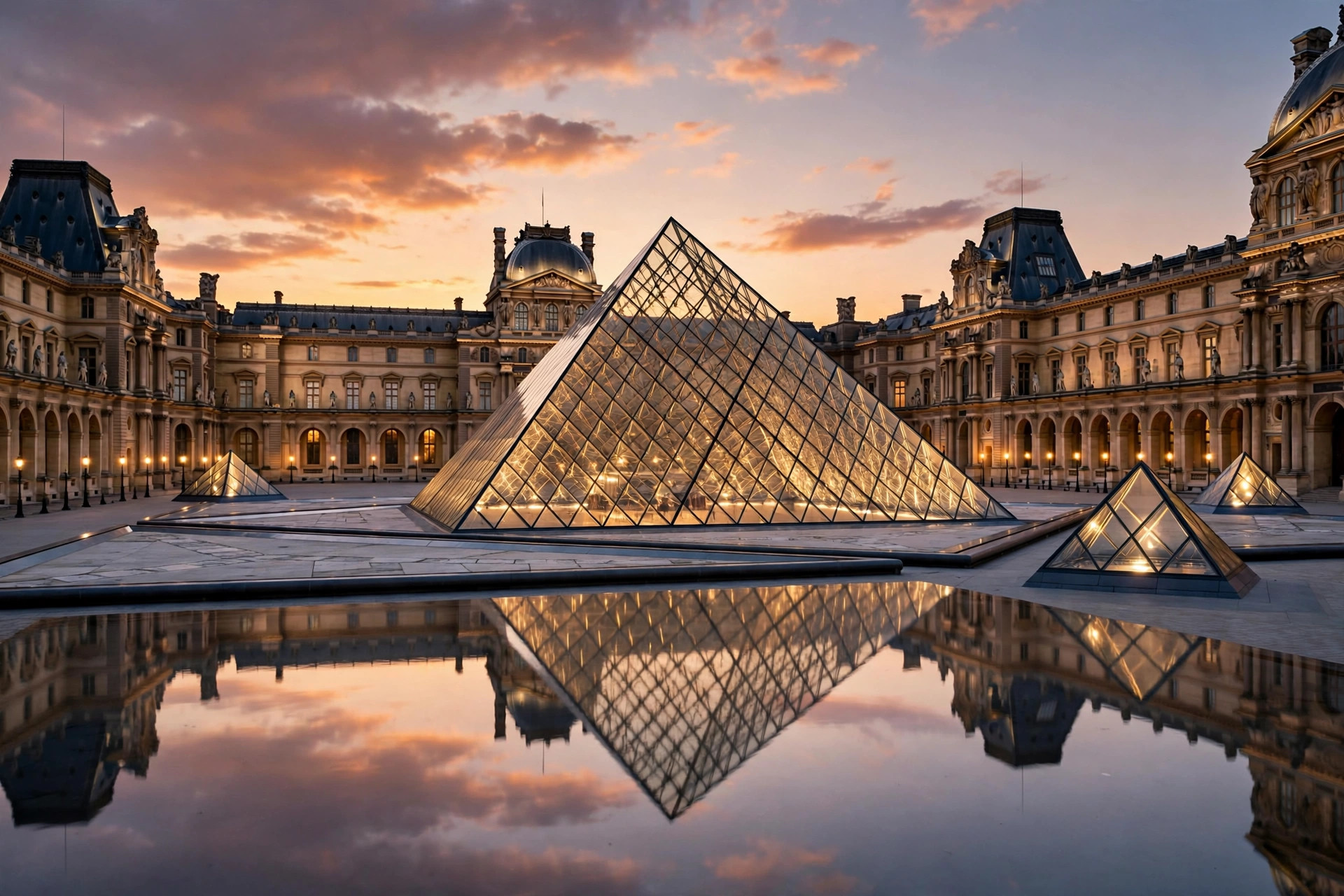
A one-hour Seine cruise takes you past Notre-Dame, the Louvre, the Musée d’Orsay, and the Eiffel Tower without any walking. That makes it a good first-afternoon activity when you have just arrived and are short on sleep, or a restful break between two busy museum days.
A daytime cruise is best for photos and for getting your bearings. A sunset sailing is the one most visitors remember: you see the buildings in daylight on the way out and lit up on the way back. Take a jacket, the open upper deck is where you want to be, but the wind off the river makes it surprisingly cold once the sun goes down.
Gardens and Neighbourhoods
Most top-ten lists stop at monuments and museums. That is a gap, because some of the best hours in Paris are free and outdoors. The Luxembourg Gardens, on the Left Bank, are the city’s most loved park: lawns, fountains, statues, and chairs you can move into the sun. The Tuileries, between the Louvre and Place de la Concorde, are the natural walk after a museum morning.
The Marais is the nicest district for a Sunday stroll: mansions, Place des Vosges, the free Carnavalet museum, and cobbled lanes. The Latin Quarter is livelier and better for an evening meal, and Saint-Germain-des-Prés is the classic café district.
Palace of Versailles Day Trip
Versailles is 20 km from central Paris, about 40 minutes on the RER C to Versailles Château Rive Gauche, and it fills a day more easily than people expect. The palace, the Hall of Mirrors, the gardens, and Marie Antoinette’s estate at Trianon together need five to six hours to do justice.
Go against the flow: spend the morning in the gardens and at Trianon, then go into the palace after 3 pm, when the Hall of Mirrors is far less packed. Avoid Mondays, when the palace is closed, and Tuesdays, when tour groups come here instead. Choose the Passport ticket for the palace, Trianon, and gardens in one; prices are typically about €25 to €35.
How to Plan Your Days
Day 1, the centre: Notre-Dame and Île de la Cité in the morning, Sainte-Chapelle, then the Louvre in the afternoon, and a Seine cruise at dusk. Day 2, the west: Eiffel Tower in the morning, Trocadéro for photos, then the Arc de Triomphe and the Champs-Élysées in the late afternoon. Day 3, Montmartre and museums: Montmartre and Sacré-Cœur in the morning, the Musée d’Orsay in the afternoon, and the Luxembourg Gardens in the evening. Day 4, Versailles: a full day out of the city. If you only have two days, cut Versailles first and keep Days 1 and 2.
Tickets, Costs, and Passes
A standard Metro-Train-RER ticket was typically about €2.55 in 2026, and several passes can be loaded directly onto a phone. A mid-range day, covering a central hotel, metro travel, two paid attractions, and meals out, is typically about €100 to €150 per person per day, before flights. Cheaper days are possible if you lean on free sights, parks, and bakeries.
The Paris Museum Pass can save money, but only if you visit four or more major sites in a short time. In 2026, prices were typically about €85 for 48 hours, €105 for 96 hours, and €125 for 144 hours. It makes the most sense on a museum-heavy trip; otherwise, individual tickets are usually simpler and cheaper. Book the Eiffel Tower, the Louvre, and Versailles first, and always use the official booking page. Keep your travel passwords safe on public Wi-Fi: our guide to the top features of Samsung Password Manager explains how.
Best Time to Visit Paris
Late spring (May to June) and early autumn (September to October) are the best all-round windows: mild days, long light, and thinner crowds than peak summer. Summer (July to August) is warm and lively, but also the busiest and priciest stretch. Winter (November to March) is the cheapest and quietest season, with Christmas markets in December and empty museums in January and February.
Practical Tips
Use the Metro between major attractions and save walking for neighbourhoods like Montmartre or Île de la Cité. Check closing days before you plan: the Louvre is closed on Tuesdays, Orsay and Versailles on Mondays. Check France’s public holidays before you finalise dates, because holidays affect opening hours and transport. Wear comfortable shoes, Paris is a walking city, and cobbles are hard on thin soles.
Watch for common tourist scams around Sacré-Cœur, the Eiffel Tower, and the Louvre: the bracelet trick, petition signers, and strangers offering to take your photo and then asking for money. A polite “no” and walking on is enough. Be careful with unsolicited messages while you travel, see our guide on what spam text messages are and how to stop them. Note that Montparnasse Tower’s observation deck closed in March 2026 for renovation, so do not plan around it.
FAQs About Visiting Paris
What is the number one tourist attraction in Paris?
For most first-time visitors, it is still the Eiffel Tower. It is the city’s most recognisable landmark and the attraction most travellers prioritise first, followed by the Louvre and Notre-Dame.
How many days do you need in Paris?
Three days cover the major sights, the Eiffel Tower, the Louvre or Orsay, Notre-Dame, Montmartre, and a Seine cruise, at a steady pace. Four or five days let you add Versailles and slow down.
What is the best time of year to visit Paris?
May, June, September, and October offer the best balance of mild weather, long days, and lighter crowds than peak July and August. April and October are pleasant and cheaper.
Which Paris attractions should you book in advance?
Book the Eiffel Tower, the Louvre, Versailles, and popular Seine cruises in advance. All three of the big sights use timed entry and sell out in peak season.
Conclusion
The top tourist attractions in Paris are the Eiffel Tower, the Louvre, Notre-Dame, Sacré-Cœur, the Arc de Triomphe, the Musée d’Orsay, and a Seine cruise, with Versailles as the best day trip. Book the big three in advance, group nearby sights together, and leave room for gardens and slow mornings.
For official opening hours and ticket prices, check the official Eiffel Tower site and the official Louvre site before you book, because prices and entry rules change.
