
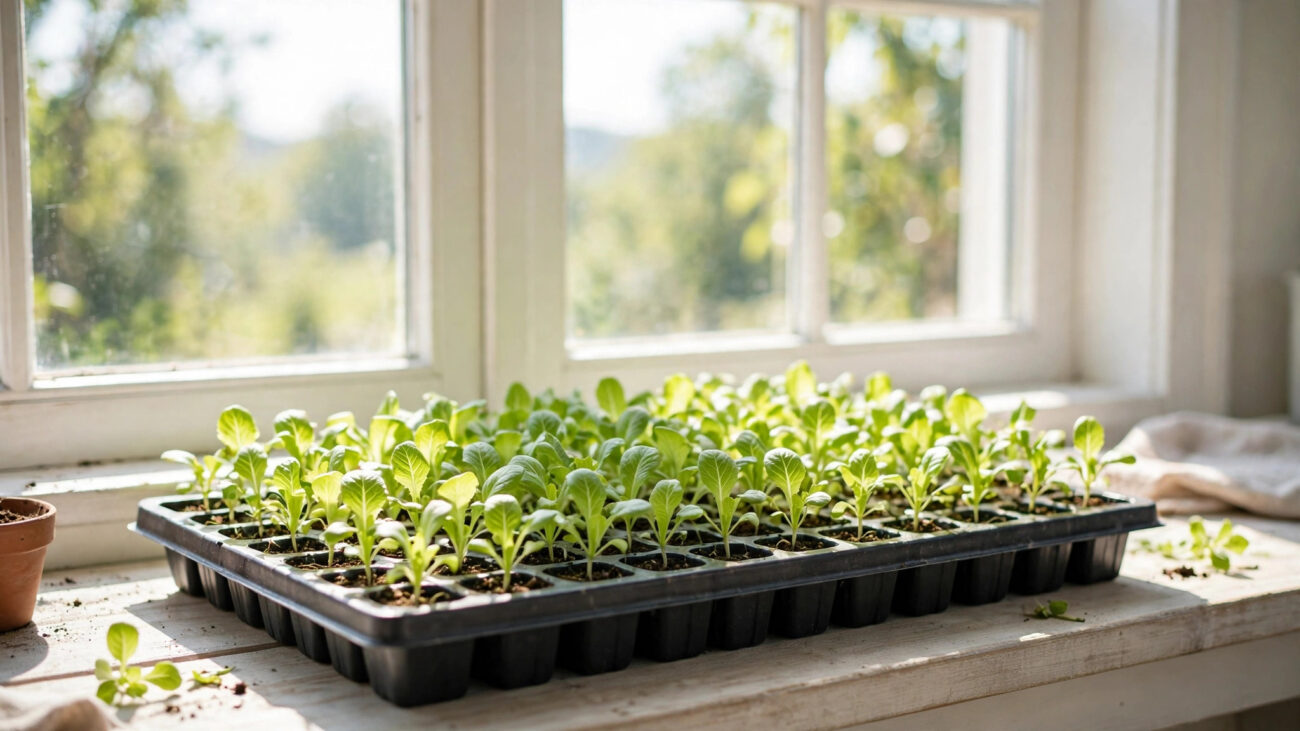
Fresh salad from a windowsill sounds like a small miracle the first time you try it, and lettuce is the vegetable that makes it real. Learning how to grow lettuce indoors for beginners is the easiest first step into home growing, because lettuce is fast, forgiving, and happy in a pot on a kitchen counter. You do not need a garden, a greenhouse, or any experience. A shallow container, a bag of potting mix, some seeds, and a bright spot are enough to start.
This guide walks you through the whole process, from picking a variety that suits a pot to sowing, watering, lighting, and harvesting your first leaves. By the end, you will know the exact container depth, the right sowing depth, how much light lettuce really needs, and how to keep picking leaves from the same plant for weeks instead of harvesting once and starting over.
Why Lettuce Is the Easiest Vegetable to Grow Indoors
Lettuce is a cool-season leafy green that grows fast and stays compact, which is exactly what indoor growing demands. Most other vegetables need deep soil, strong sun, or months of patience. Lettuce asks for very little and pays you back in three to four weeks with baby leaves you can eat the same day you pick them.
It also tolerates the conditions inside a normal home better than most vegetables. It grows well in the 60 to 70 degree Fahrenheit range that most people keep their homes at, and it does not need the intense heat that tomatoes or peppers demand. A south facing window can work, and a simple LED grow light makes results consistent all year, even in the middle of winter.
Another reason beginners succeed with lettuce is that mistakes are cheap and quick to fix. If a sowing fails, you lose a week, not a season. Seeds are inexpensive, germination takes only 7 to 14 days, and you can sow a fresh batch every two weeks so there is always another crop coming. That short cycle is what turns a first attempt into a habit.
Finally, lettuce fits small spaces. A single wide container on a windowsill can hold a dozen plants, and a small shelf with a light can feed a household’s salads through the winter. If you have ever wanted to grow your own food but felt you had no room, lettuce is the proof that you do.
Best Lettuce Varieties for Growing Indoors
Not every lettuce is equal indoors. Loose-leaf varieties are the best choice for beginners because you harvest the outer leaves while the plant keeps growing, instead of waiting for a single head to form. Head lettuces like iceberg need more space, more time, and cooler conditions, so they are better left outside.
These are the most reliable varieties for pots and windowsills:
| Variety | Type | Baby Leaves | Why It Works Indoors |
|---|---|---|---|
| Black Seeded Simpson | Loose-leaf | 3 to 4 weeks | Fast, heat tolerant for a lettuce, and regrows well after cutting |
| Salad Bowl | Loose-leaf | 3 to 4 weeks | Produces a large number of tender leaves from one plant |
| Oak Leaf | Loose-leaf | 4 weeks | Attractive lobed leaves, slow to bolt, good flavour |
| Red Sails | Loose-leaf | 4 weeks | Red-tipped leaves add colour, tolerates warmth better than most |
| Little Gem | Mini romaine | 5 to 6 weeks | Compact heads, crisp texture, fits small pots |
| Buttercrunch | Butterhead | 5 to 6 weeks | Soft, sweet leaves, forms a small loose head |
If you can only pick one, start with Black Seeded Simpson or Salad Bowl. Both germinate reliably, grow fast, and forgive a missed watering better than fancier varieties. Once you have one successful crop, try Oak Leaf or Red Sails for colour and variety in the salad bowl.
Buy fresh seed from a reputable supplier and check the packet date. Lettuce seed stays viable for about two to three years when stored cool and dry, but old seed germinates slowly and unevenly, which is the most common reason a first sowing looks patchy. A fresh packet costs very little and removes that variable entirely.
What You Need to Grow Lettuce Indoors
The shopping list is short, and most of it is reusable for years. You do not need special equipment to start, only the right basics.
- Container: a wide, shallow pot or tray, 6 to 8 inches deep, with drainage holes. A window box works well. Avoid deep pots, which waste soil and stay wet at the bottom.
- Potting mix: a good quality indoor potting mix, not garden soil. Garden soil compacts in pots, drains poorly, and can carry pests indoors.
- Seeds: one packet of a loose-leaf variety, as listed above.
- Light: a bright south facing window, or a basic LED grow light on a timer.
- Watering can or spray bottle: for gentle watering that does not wash tiny seeds away.
- Optional: a shallow tray under the pot to catch drips, and half-strength liquid feed for later growth.
Set the container where it will live before you fill it, because a wet pot of soil is heavy. Put the tray underneath, fill the pot with moistened potting mix to about an inch below the rim, and press it down lightly. The surface should be level and damp, not soggy.
How to Sow Lettuce Seeds Indoors, Step by Step
Sowing lettuce is simple, and the most common beginner mistake is burying the seeds too deep. Lettuce seeds need light to germinate, so they go barely under the surface.
- Moisten the mix first. Water the potting mix until it is evenly damp, like a wrung-out sponge, before you sow. Dry mix is hard to wet evenly afterwards.
- Scatter the seeds thinly. Sprinkle seeds across the surface, aiming for about an inch apart. It is tempting to sow thickly, but crowded seedlings compete and stay small.
- Cover very lightly. Sprinkle just 1/8 to 1/4 inch of fine potting mix over the seeds, or press them gently into the surface with your palm. They should be barely covered.
- Mist the surface. Use a spray bottle to dampen the top without disturbing the seeds. A heavy pour from a can can wash them into clumps.
- Cover for humidity, briefly. A clear lid or plastic wrap over the tray keeps moisture in for the first few days. Remove it as soon as seedlings appear, usually within a week, so air can circulate.
- Keep it cool and bright. Place the container in bright light at 60 to 70 degrees Fahrenheit. Germination takes 7 to 14 days, and you should see the first tiny green pairs of leaves within a week.
When seedlings have two or three true leaves, thin them to 4 to 6 inches apart. Thinning feels wasteful, but it is the step that decides whether you get full-size leaves or a crowded mat of stunted plants. The thinnings are edible, so snip them with scissors and add them to a salad instead of throwing them away.
Light, Water, and Temperature for Indoor Lettuce
Lettuce is not fussy, but it does have three clear preferences. Get these right and the plants mostly take care of themselves.
Light is the biggest factor. Lettuce needs 12 to 16 hours of light a day indoors. A south facing window in spring or summer can provide this, but in winter the days are too short and the light too weak, so growth slows and plants stretch. A basic LED grow light hung 4 to 6 inches above the leaves, on a timer for 14 hours a day, gives steady growth in any season. If stems look long and pale, the plants are reaching for more light, so move the light closer or add hours. For a detailed look at indoor setups, GrowsGarden’s guide to growing lettuce indoors year-round covers containers and lighting in more depth.
Water little and often. Keep the soil consistently moist but never waterlogged. Check daily by pressing a finger into the top inch of mix. If it feels dry, water gently at the base of the plants. If it feels wet, wait. Lettuce roots are shallow, so they dry out faster than a deep-rooted plant, but they also rot quickly in standing water. A pot with drainage holes and a tray you empty after watering prevents the most common watering mistake.
Temperature matters more than most beginners expect. Lettuce grows best at 60 to 70 degrees Fahrenheit and starts to struggle above 75 degrees. Warm rooms make leaves bitter and push plants to bolt, which means they shoot up a flower stalk and the leaves turn tough. Keep containers away from radiators and heating vents, and pick a cooler room if you have the choice. A spot that feels comfortable to you in a light sweater is about right for lettuce.
Feed lightly once plants are established. A half-strength liquid feed every 10 to 14 days is plenty. Too much fertiliser makes soft, weak leaves and can add a chemical taste, so less is more here.
How to Harvest Lettuce So It Keeps Growing
The cut-and-come-again method is what makes indoor lettuce so productive. Instead of pulling the whole plant, you harvest the outer leaves and leave the centre to keep producing.
Start picking when leaves are 3 to 4 inches long, usually 3 to 4 weeks after sowing for baby leaves, or 6 to 8 weeks for full-size leaves. Use clean scissors and cut the outer leaves about an inch above the base, taking no more than one-third of the plant at a time. The inner leaves keep growing, and a healthy plant can give you several pickings over four to six weeks.
Harvest in the morning when leaves are crisp and full of water. Rinse them gently, spin or pat them dry, and store them in the fridge in a container lined with a clean towel. Home-grown lettuce wilts faster than shop-bought because it has no preservatives, so pick only what you need for the next day or two.
To keep the supply going, sow a fresh batch every two weeks. This succession sowing means that as one container finishes, the next is already producing baby leaves. Two or three containers started two weeks apart will keep a household in salad leaves almost continuously.
Common Problems When Growing Lettuce Indoors
Most indoor lettuce problems have a simple cause and a simple fix. Here are the ones beginners meet most often.
- Leggy, pale seedlings: not enough light. Move the container to a brighter window or lower the grow light to 4 to 6 inches above the leaves.
- Bitter leaves: usually heat or age. Move plants to a cooler spot, water more consistently, and harvest younger leaves.
- Leaves wilting in the afternoon: the soil dried out. Water at the base in the morning and check again in the evening on warm days.
- Damping off (seedlings collapsing at the base): soil too wet with poor air flow. Remove any cover, let the surface dry between waterings, and start the next batch in fresh mix.
- Bolting (a tall stalk shooting up): the plant is too warm or too old. Harvest what you can, then sow a fresh batch. Heat-tolerant varieties like Red Sails bolt later.
- Tiny white flies or aphids: check the undersides of leaves weekly. A strong spray of water removes most pests, and a mild insecticidal soap works for stubborn cases.
One more thing to watch is spacing. Crowded plants stay small, trap moisture, and invite disease. If your container looks like a green carpet, thin it. Fewer plants with room to grow will always outproduce a crowded tray.
FAQs About Growing Lettuce Indoors
Can you grow lettuce indoors all year?
Yes. With a grow light and a cool room, lettuce grows in every season. In summer, the challenge is heat, so choose a cooler spot and a heat-tolerant variety. In winter, the challenge is light, so a simple LED on a timer solves it. That is the whole advantage of growing indoors.
How long does lettuce take to grow indoors from seed?
Baby leaves are ready in 3 to 4 weeks, and full-size leaves take 6 to 8 weeks. Germination itself takes 7 to 14 days. Loose-leaf varieties are the fastest, while head-forming types like butterhead take the longest.
Why is my indoor lettuce leggy?
Leggy lettuce is almost always a light problem. The plants are stretching toward the nearest light source because they are not getting enough hours or intensity. Move them to your brightest window or hang a grow light 4 to 6 inches above the leaves for 12 to 16 hours a day.
Can you grow romaine indoors from scraps?
Yes, you can regrow the base of a romaine heart in a shallow dish of water, and it will sprout new leaves. It is a fun experiment, but it is slower and less productive than growing from seed. If you want a steady supply, sow seeds. If you want a quick kitchen project, try the scrap method with Little Gem.
Do you need a grow light or is a window enough?
A south facing window can be enough in spring and summer, when days are long and bright. In autumn and winter, a window alone usually is not enough, and plants grow slowly and stretch. A basic LED grow light is inexpensive, uses little electricity, and makes the difference between a crop that survives and a crop that thrives.
Conclusion
Growing lettuce indoors is the kindest possible start to growing your own food. A shallow pot, a packet of loose-leaf seed, and a bright spot are all it takes, and the first leaves are ready in under a month. Sow thinly, keep the soil moist, give the plants 12 to 16 hours of light, and harvest the outer leaves so the plant keeps producing. Sow a new batch every two weeks and you will have fresh salad leaves all year, picked minutes before you eat them.
Start with one container this week. Once you taste lettuce that was growing an hour ago, you will understand why so many gardeners start here and never stop.
