
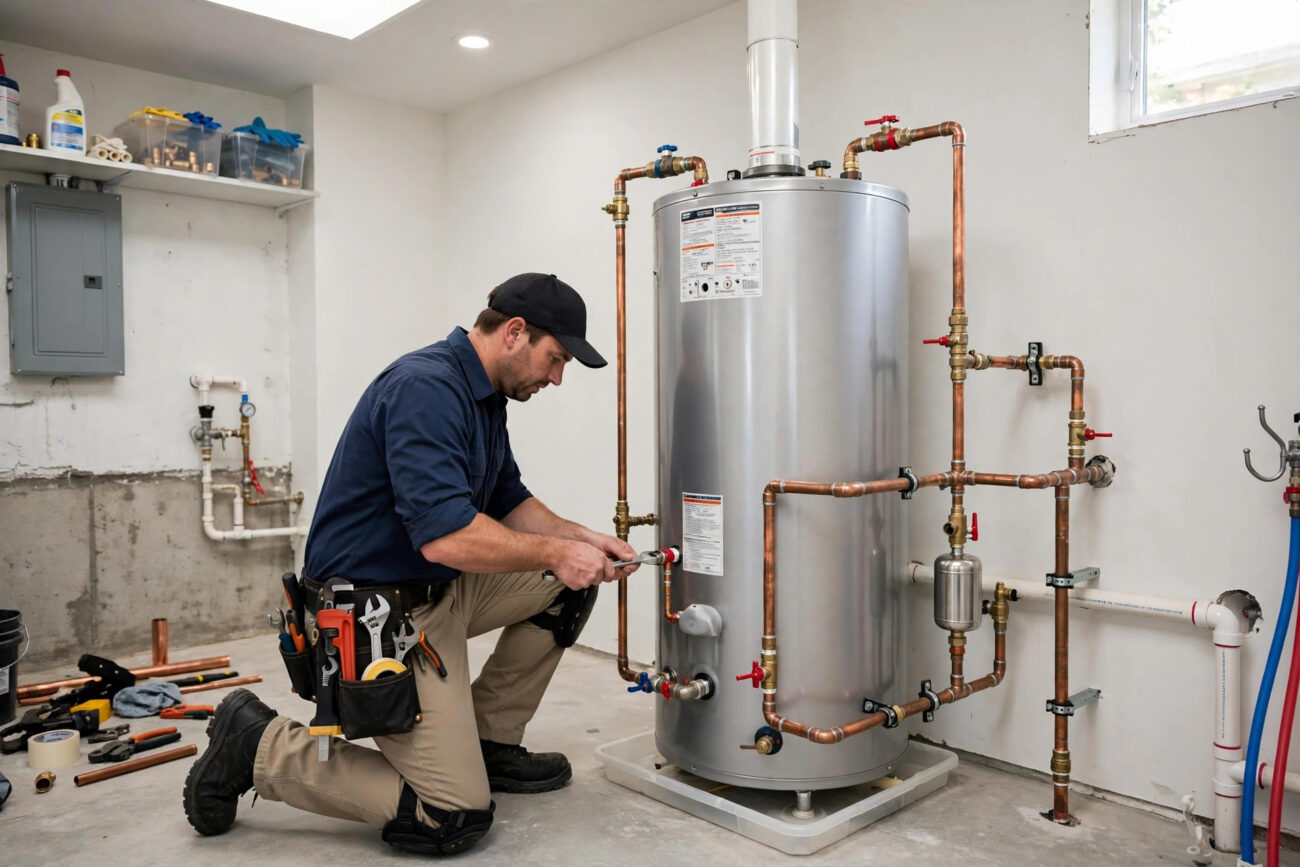
A cold shower on a winter morning is how most people discover their water heater is failing. Knowing how much does it cost to replace a water heater before that day arrives turns a crisis into a planned purchase. In 2026, a typical replacement costs about $900 to $3,000 installed, with a national average near $1,400 for a standard tank model, according to Angi 2026 data. The final price depends on the type of heater, the size your household needs, and whether your home already has the right gas line, venting, and electrical supply.
This guide breaks down the real costs by type and size, explains what the quoted price usually leaves out, and helps you decide whether to repair or replace. It also covers the tankless question honestly, because the cheapest option today is not always the cheapest over twenty years.
How Much Does It Cost to Replace a Water Heater in 2026?
For a like-for-like tank replacement, most US homeowners pay $881 to $1,826 for the unit plus installation, with the national average around $1,349. That is the figure Angi reports for 2026, and it covers a standard 40 or 50 gallon tank installed by a licensed plumber. A simple swap in a home where the connections already fit can come in at the low end. A larger tank, a switch to a different fuel, or extra work on venting and piping pushes the price toward the high end and beyond.
Tankless models cost more upfront: $1,400 to $3,900 installed is typical, and the total can pass $4,000 when the home needs a new gas line or venting. Heat-pump hybrid heaters sit in between at $1,200 to $3,500. Labour is roughly half of the total bill in most jobs, and it is the part that varies most by region. A tank swap usually takes a few hours and costs $150 to $450 in labour. A tankless install is a bigger job, often $600 to $1,900 in labour, and can take a full day or more.
Two things are worth remembering. First, the cheapest quote is not always the cheapest job: a price that leaves out the permit, the haul-away of the old unit, or an expansion tank will grow once work starts. Second, these are 2026 US figures. Prices in dense cities run higher than in rural areas, and a quote from your own area is the only number that truly applies to your home.
Water Heater Replacement Cost by Type
The type of heater is the single biggest driver of cost. Each type suits a different home, and the right choice depends on your fuel supply, your space, and how much hot water your household uses.
| Type | Typical Installed Cost | Best For | Drawbacks |
|---|---|---|---|
| Electric tank | $600 to $3,500 | Homes without gas, simple installs | Slower recovery, higher running cost in some areas |
| Gas tank | $700 to $2,700 | Most family homes, fast recovery | Needs venting and a gas line |
| Tankless (gas or electric) | $1,400 to $3,900 | Endless hot water, long life | High upfront cost, may need gas or electrical upgrades |
| Heat-pump hybrid | $1,200 to $3,500 | Lowest running cost, warm climates | Needs space and airflow, noisier than a tank |
| Solar water heater | $3,000 to $8,000+ | Sunny climates, lowest long-term bills | Highest upfront cost, needs roof space and a backup |
Gas tank heaters remain the default for most American homes because they heat water quickly and recover fast after heavy use. Electric tanks are simpler to install and work anywhere with an electrical supply, but they heat more slowly. Tankless heaters give endless hot water and last 20 years or more, which is roughly double the life of a tank, but they demand a large gas supply or a heavy electrical circuit. Heat-pump hybrids are the efficiency champions, using about a third of the electricity of a standard electric tank, but they need a room with enough air space and they cool the room they sit in.
Water Heater Cost by Size
Size matters as much as type. A heater that is too small leaves the last person in the shower cold. A heater that is too big wastes money heating water nobody uses. The right size follows your household, not your old heater, because families grow and shrink.
- 40 gallon: 1 to 2 people. Typical installed cost $800 to $2,300.
- 50 gallon: 3 to 4 people, the most common size in US homes. Typical installed cost $800 to $2,500.
- 75 gallon: 5 or more people, or homes with a large soaking tub. Typical installed cost $1,100 to $4,000.
- Tankless sizing: measured in gallons per minute, not gallons. A household that runs two showers at once usually needs 8 to 10 gallons per minute in a warm climate and more in a cold one, because the incoming water is colder.
If you have added a bathroom, a dishwasher, or a large tub since the old heater was installed, tell the plumber before you accept a quote. Sizing by the old unit is a common mistake, and it is the one that leaves a family short of hot water every morning.
What a Replacement Quote Usually Leaves Out
The headline price often covers the heater and the basic labour only. These extras are where budgets get surprised.
- Permits: $25 to $300, depending on the city. Most replacements need a permit and an inspection, and a reputable plumber handles both.
- Haul-away and disposal: $50 to $150 to remove the old tank, which is heavy and contains sediment and sometimes hazardous material.
- Expansion tank: $50 to $200 installed, often required by code when a home has a closed plumbing system.
- Venting: $100 to $500 or more when switching fuel types or moving to a tankless unit, which needs different venting than a tank.
- Gas line or electrical upgrade: $300 to $1,000 or more for tankless, which needs a larger gas line or a dedicated high-amperage circuit.
- Water line and drain work: $100 to $400 if pipes need rerouting, or if the new heater sits in a different spot.
- Earthquake strapping: required by code in some states, a modest cost that is easy to forget.
Ask every plumber for an itemised quote that lists the permit, disposal, and any code upgrades separately. Three itemised quotes are worth more than five headline prices, because you can see exactly what differs between them.
Repair or Replace Your Water Heater?
This is the decision most homeowners face, and the answer follows a simple rule. Repair when the heater is under 10 years old, the problem is small, and there is no leak. Replace when it is past 10 to 15 years, when it leaks or is corroded, or when repairs keep coming.
A tank water heater lasts 10 to 15 years. A tankless unit lasts 20 years or more. Age alone is not a reason to replace a working heater, but age plus symptoms is. Rusty water, rumbling or popping sounds from sediment build-up, water that never gets fully hot, and dampness around the base are all signs the tank is near the end. A leak from the tank itself cannot be repaired: the tank is done, and the only fix is replacement.
Smaller problems are usually worth fixing. A failed heating element, a worn thermostat, or a faulty pilot light are inexpensive repairs on a heater with years left. The US Department of Energy notes that tankless heaters are 24 to 34 percent more efficient than conventional tanks, so if your heater is old and your energy bills are high, replacement can pay for itself over time. As a rough guide, if a repair costs more than half the price of a replacement, replace it.
One more consideration: the federal 25C tax credit for energy-efficient water heaters ended on 31 December 2025. Do not let anyone quote it as a current saving. State and utility rebates still exist in some areas, and your plumber or utility company can confirm what applies where you live.
How Long Does Replacement Take?
A like-for-like tank swap usually takes two to four hours, including draining the old unit, disconnecting it, fitting the new one, and testing it. You will be without hot water for most of that time, so plan showers and laundry around the appointment.
Switching types takes longer. A tankless install often takes a full day, and sometimes two, because the plumber must run a new gas line or electrical circuit, install new venting, and mount the unit. A heat-pump hybrid install takes a similar amount of time when the space needs preparation. If the job needs a permit inspection, that can add a day before the heater is signed off, though you can usually use it in the meantime.
Book the work for a weekday if you can. Emergency weekend call-outs cost more, and a heater that fails on a Friday night is the most expensive kind of replacement. If your heater is over 12 years old, getting quotes now, while it still works, is the cheapest move you can make.
FAQs About Water Heater Replacement Cost
How much does it cost to replace a water heater in 2026?
About $900 to $3,000 installed for most homes, with a national average near $1,400 for a standard tank. A basic 40 or 50 gallon tank swap is $881 to $1,826 on average, while a tankless install runs $1,400 to $3,900. Permits, disposal, and any gas or electrical upgrades add to the total.
Is it cheaper to repair or replace?
Repair is cheaper when the heater is under 10 years old, the fault is small, and there is no leak. Replace when it is past 10 to 15 years, when the tank leaks or is corroded, or when repairs keep repeating. If a repair costs more than half the price of a new unit, replacement is the better choice.
How long does water heater replacement take?
A like-for-like tank swap takes a few hours. A tankless install takes a day or more because it needs new venting and often a larger gas line or electrical circuit. Permit inspections can add a day to the sign-off, though you can usually use the heater while waiting.
What size water heater do I need?
A 40 gallon tank suits 1 to 2 people, a 50 gallon tank suits 3 to 4 people, and a 75 gallon tank suits 5 or more. For tankless, size by flow rate: a household running two showers at once usually needs 8 to 10 gallons per minute, more in cold climates where incoming water is colder.
Does a tankless water heater save money?
Over its lifetime, usually yes. A tankless unit costs more upfront but lasts 20 years or more and uses 24 to 34 percent less energy than a conventional tank, according to the US Department of Energy. The savings show up in lower running costs over two decades, not in the first year.
Conclusion
Replacing a water heater costs about $900 to $3,000 for most homes in 2026, with the average tank swap near $1,400. The type and size you choose matter more than the brand, and the extras, permits, disposal, venting, and code upgrades, are where quotes differ most. If your heater is over 10 years old, get itemised quotes now while it still works. And if the tank is leaking or corroded, do not wait: a planned replacement is always cheaper than an emergency one.
