
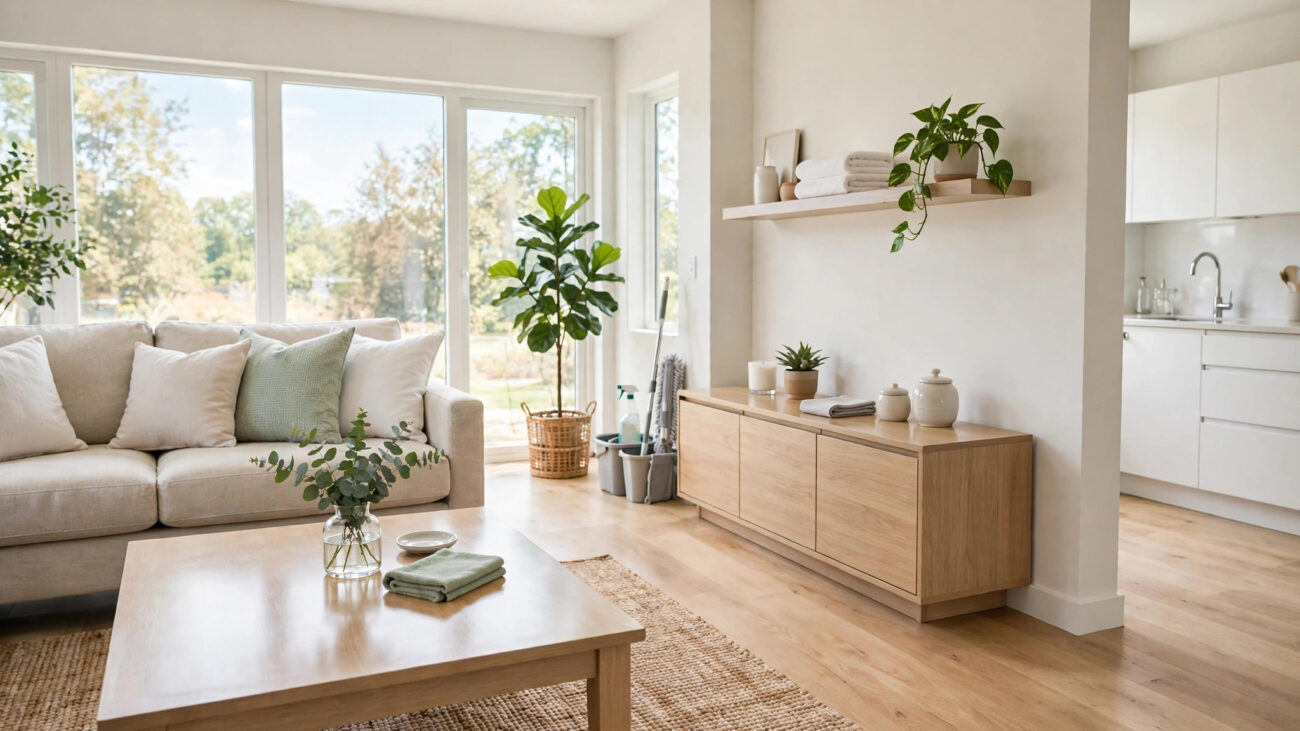
A weekly clean keeps a home looking tidy, but it never reaches the places where grime quietly builds up. Learning how to deep clean your house with a room-by-room checklist changes that. A deep clean goes past the surfaces you see every day and tackles the inside of the oven, the grout, the baseboards, the vents, and everything behind and under the furniture. The result is a home that feels genuinely fresh, not just tidied.
This guide gives you a complete checklist in the right order, a realistic weekend plan, and the frequencies that keep a deep clean from becoming a once-a-year ordeal. It also covers the safety rules that matter, including the one combination of cleaners you must never mix. Work through it room by room, and by Sunday evening your whole house will feel new again.
What Is Included in a Deep Cleaning?
A deep clean is a standard clean plus everything a weekly clean skips. The standard clean covers floors, counters, sinks, toilets, mirrors, and visible dust. The deep clean adds the hidden and neglected jobs: inside the oven, fridge, and freezer, behind and under appliances, baseboards and door frames, light fixtures and ceiling fans, grout lines, window tracks, vents, and under beds and sofas.
It also includes the things you touch every day but rarely wash, like light switches, door handles, remote controls, and the tops of cabinets. And it includes fabric care: washing cushion covers, curtains, and shower curtains, and vacuuming mattresses and upholstery.
How long it takes depends on the size of your home. A small apartment can be deep cleaned in one long day. A typical family home takes a weekend, roughly two to three times as long as a standard clean. That sounds like a lot, but much of the time is waiting: oven cleaner working, laundry running, floors drying. Plan the order well and the work feels manageable.
What Order Should You Deep Clean a House?
Order is the secret to deep cleaning, and the rule is simple: top to bottom, dry before wet, and dirtiest rooms first. Dust falls downwards, so cleaning a floor before the shelves above it means cleaning the floor twice. Dry dusting before mopping means you are not pushing wet dust around.
The room order that works best is: kitchen first, then bathrooms, then bedrooms and closets, then living and dining rooms, and floors last in every room. The kitchen and bathrooms are the hardest and messiest, so doing them first means the worst is over by midday. Bedrooms and living rooms are mostly dusting and fabric care, which feels easier after the scrubbing is done.
Within each room, work in the same pattern: ceiling and high corners first, then walls, fixtures, and shelves, then surfaces and appliances, then the floor last. Start the jobs that need soaking time first, such as oven cleaner or a shower head soaking in vinegar, then clean other things while they work.
Deep Cleaning Supplies Checklist
You do not need expensive products. A few basics cover almost every job in the house.
- All-purpose cleaner for counters, sinks, and most surfaces.
- Baking soda and white vinegar for ovens, drains, grout, and deodorising.
- Dish soap for greasy surfaces and as a gentle all-rounder.
- Microfibre cloths, at least six, so you can switch to a clean one often.
- A vacuum with attachments, including a crevice tool and an upholstery brush.
- A mop and bucket, plus a scrub brush for grout and tiles.
- Rubber gloves and, for oven cleaner, eye protection.
- Bin bags, a laundry basket, and a box for clutter that needs a new home.
One safety rule matters more than any other: never mix bleach with ammonia or with any other cleaner. The mixture creates toxic gases that can cause serious breathing problems. The US Centers for Disease Control and Prevention warns about this combination specifically, and its cleaning and disinfecting guidance explains how to use household cleaners safely. If you use bleach, use it alone, in a ventilated room, and rinse well before using anything else on the same surface.
Kitchen Deep Clean Checklist
The kitchen takes the longest, so start here while your energy is highest. Begin by clearing every counter and emptying the sink, then work through the list.
- Clean the oven: apply oven cleaner or a baking soda paste the night before if you can, then wipe and rinse. Clean the racks in the sink with hot soapy water.
- Clean the fridge: take everything out, throw away anything expired, wipe shelves and drawers with warm soapy water, and wipe the door seals. Do the freezer the same way, and defrost it if ice has built up.
- Degrease the hob, extractor hood, and filter. The filter can usually soak in hot soapy water, or go in the dishwasher if the manual allows it.
- Descale the kettle and clean the microwave: heat a bowl of water with lemon for two minutes, then wipe the inside clean.
- Wipe the inside of cabinets and drawers, and clean the tops of cabinets, where grease and dust collect.
- Clean the sink and taps, and pour baking soda followed by vinegar down the drain to clear smells, then flush with hot water.
- Wipe light switches, handles, and the bin lid. Wash the bin itself.
- Clean small appliances: the toaster crumb tray, the coffee machine, and the blender base.
- Finish with the floor: vacuum or sweep, then mop. Clean the skirting boards first so dust does not fall on a clean floor.
Bathroom Deep Clean Checklist
Bathrooms are small but dense with jobs. Work from the top down, and let products do the work while you clean elsewhere.
- Remove the shower head and soak it in half-strength vinegar to clear limescale, or tie a bag of vinegar around it if it cannot be removed.
- Spray the shower and bath with cleaner and leave it to work while you clean the toilet and sink.
- Scrub grout with a brush and baking soda paste. Rinse well and dry, because damp grout grows mould quickly.
- Clean the toilet inside and out, including the base, the seat hinges, and the wall behind it.
- Descale taps and clean the sink, mirror, and light fixtures.
- Wash or replace the shower curtain and bath mat. Clean the extractor fan cover, which collects dust and reduces airflow.
- Empty and wipe cabinets and drawers, and throw away expired medicines and old toiletries.
- Mop the floor last, getting into the corners and around the base of the toilet.
Bedroom and Living Room Deep Clean Checklist
Bedrooms and living rooms are mostly about dust, fabric, and clutter. They are also the rooms where a deep clean makes the biggest difference to how the house feels and smells.
- Strip the bed and wash all bedding, including pillow protectors and the duvet cover. Vacuum the mattress, sprinkle baking soda over it, leave it for an hour, then vacuum again.
- Wash cushion covers, throws, and curtains, following the care labels. Vacuum sofas and armchairs, including under the cushions and along the seams.
- Dust ceiling fans, light fixtures, and the tops of wardrobes and shelves. A damp microfibre cloth on a long handle reaches most high spots.
- Wipe skirting boards, door frames, light switches, and door handles.
- Clean windows inside, and wipe the tracks and frames where dust and dead insects collect.
- Declutter one surface at a time: a drawer, a shelf, a bedside table. Keep a box for things that belong in another room and a bag for donations.
- Vacuum under beds and sofas, moving them if you can. This is where dust, lost items, and allergens gather.
- Clean the floor last: vacuum carpets slowly in two directions, or mop hard floors after sweeping.
How Often Should You Deep Clean?
A full deep clean once or twice a year is enough for most homes, with lighter deep-cleaning jobs spread through the year. The table below is a realistic schedule that keeps the big job from becoming overwhelming.
| Job | How Often | Notes |
|---|---|---|
| Full deep clean, whole house | Once or twice a year | Spring and autumn are the natural times |
| Oven and fridge interior | Every 3 months | More often if you cook daily |
| Grout scrub and shower descale | Every 3 months | Monthly in hard-water areas |
| Mattress vacuum and airing | Every 3 months | Baking soda treatment each time |
| Curtains and cushion covers | Twice a year | Check care labels first |
| Behind and under large appliances | Twice a year | Unplug before moving anything heavy |
| Window tracks and vents | Every 6 months | Vacuum first, then wipe |
| Carpets, professional clean | Once a year | More often with pets or allergies |
Homes with pets, young children, or allergy sufferers benefit from the shorter end of every interval. The point is not perfection, it is a rhythm. A home that gets a light deep clean every three months never needs a dreaded annual marathon.
Weekend Plan for a Whole-House Deep Clean
Here is a plan that fits a typical three-bedroom home into one weekend without exhausting you.
Saturday morning: kitchen. Start the oven cleaner, empty the fridge, and work through the kitchen checklist. Put the first load of laundry on.
Saturday afternoon: bathrooms. Soak shower heads, scrub grout, and clean both rooms. Wash shower curtains and bath mats.
Sunday morning: bedrooms. Strip beds, vacuum mattresses, wash bedding and curtains, dust high surfaces, and declutter one drawer or closet per room.
Sunday afternoon: living and dining rooms. Vacuum upholstery, dust shelves and fixtures, clean windows, and mop or vacuum every floor last.
Take a real break between sessions. Deep cleaning is physical work, and tired cleaners cut corners and make mistakes. Drink water, open windows for fresh air, and stop when a room is done rather than pushing into the next one half-heartedly.
FAQs About Deep Cleaning Your House
What is included in a deep cleaning?
A deep cleaning covers everything a weekly clean skips: inside the oven, fridge, and freezer, behind and under appliances, baseboards, grout, vents, window tracks, light fixtures, and under beds and sofas. It also includes washing cushion covers and curtains and vacuuming mattresses and upholstery.
How long does a deep clean take?
A small apartment takes one long day. A typical family home takes a weekend, about two to three times as long as a standard clean. Much of that time is waiting for cleaners and laundry to work, so a good order matters more than speed.
What order should you deep clean a house?
Clean the kitchen first, then bathrooms, then bedrooms and closets, then living and dining rooms. Inside each room, work top to bottom and dry before wet, and clean the floor last. This order means dust never falls on a surface you have already cleaned.
Can I deep clean in one day?
Yes, if your home is small or you have help. For most family homes, splitting the job over two days gives better results and less exhaustion. If you must do it in one day, do the kitchen and bathrooms first, then the rooms that matter most to you, and leave the rest for the following weekend.
How often should you deep clean?
A full deep clean once or twice a year is enough for most homes. Lighter jobs like the oven, fridge, and grout deserve attention every three months, and mattresses should be vacuumed quarterly. Homes with pets or allergies benefit from more frequent cleaning.
Conclusion
A deep clean is not about perfection, it is about reaching the places your weekly routine never touches. Work in the right order, kitchen and bathrooms first, top to bottom and dry before wet, and let cleaners soak while you work elsewhere. Spread the lighter jobs through the year and the big weekend clean stops feeling like a punishment. Start with the oven this Saturday morning, and by Sunday evening your home will smell, look, and feel like a different place.
Keep this checklist saved for next time. The second deep clean is always faster, because you will know exactly where everything is and what each room needs.
