
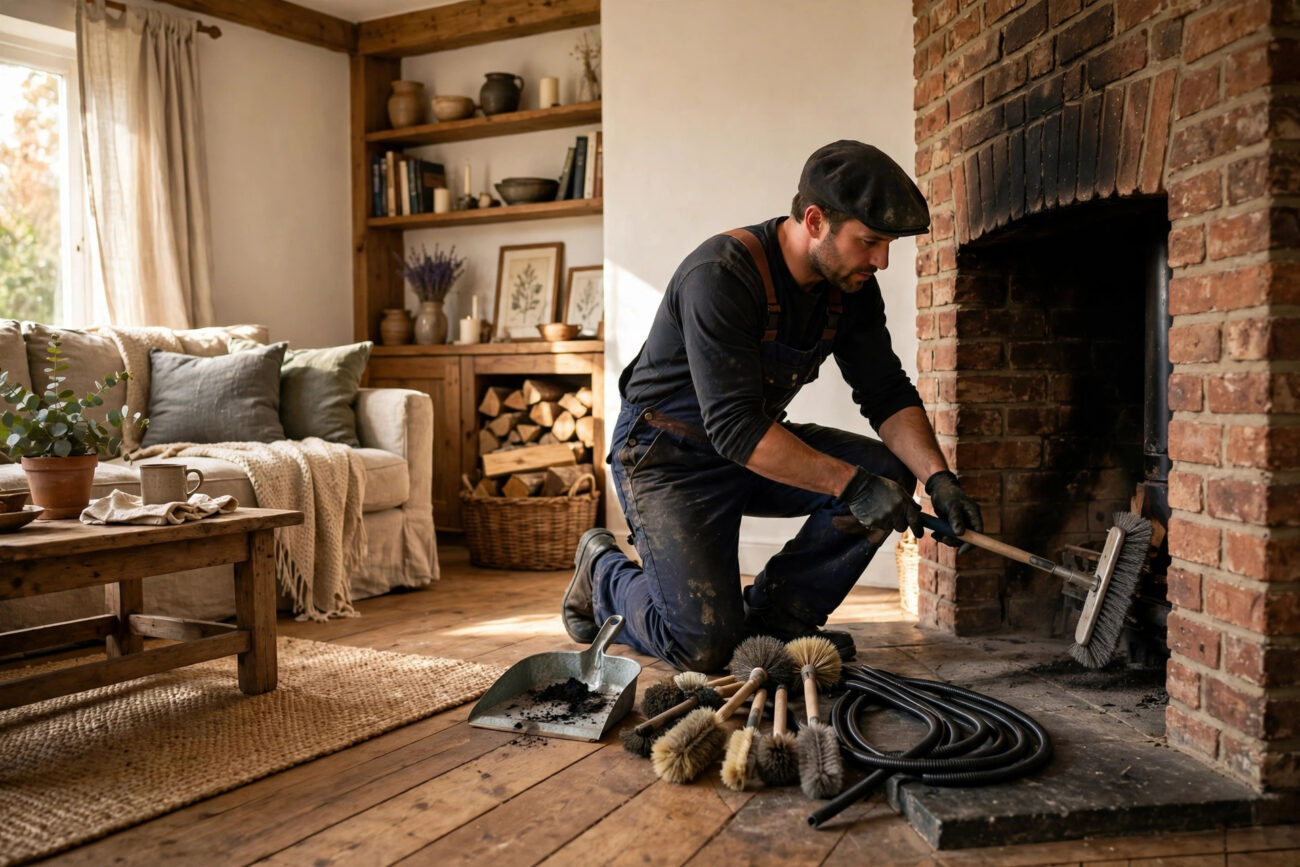
If you heat your home with a wood-burning fireplace, a chimney sweep is one of those jobs that is easy to forget until it becomes urgent. So how much does chimney sweeping cost? In the United States, a standard sweep costs $150 to $300, with a national average near $250, according to 2026 pricing from Angi and This Old House. The final price depends on what the sweep finds inside your flue, how tall and accessible your chimney is, and whether you need an inspection as well.
This guide covers US pricing only, because UK figures, often quoted as 75 to 150 pounds, dominate many search results and confuse American homeowners. It explains the difference between a sweep and an inspection, the three inspection levels and what each costs, when glazed creosote turns a routine sweep into a deep clean, and how often your chimney actually needs attention under the NFPA 211 standard.
How Much Does Chimney Sweeping Cost in 2026?
A standard chimney sweep for a wood-burning fireplace costs $150 to $300 in most of the United States, and the national average sits near $250. The job usually takes 45 to 90 minutes and includes brushing the flue, removing soot and creosote, cleaning the firebox, and checking the damper and cap.
Prices vary by region. In the Southeast, a standard sweep can cost as little as $140. In dense Northeast cities, the same job can cost $500 or more, because labour rates are higher and access is harder. Labour generally runs $75 to $125 per hour in urban areas and $50 to $80 per hour in rural areas, and most sweeps are priced as a flat fee rather than by the hour.
Gas fireplaces are cheaper to service, usually $100 to $200, because they produce far less soot and creosote. The work is mostly an inspection and a light cleaning, plus a check of the venting and the gas connections. Even so, a gas chimney still needs an annual inspection, because blockages from nests, debris, or a damaged cap can cause carbon monoxide to back up into the home.
Sweep vs Inspection: What Is the Difference?
A sweep cleans. An inspection checks. They are different jobs, they are often sold together, and confusing them is the most common reason a quote looks wrong.
A sweep removes soot, ash, and creosote from the inside of the flue, the smoke chamber, and the firebox. It is maintenance, and it keeps the chimney safe to use. An inspection looks at the structure of the chimney itself: the flue liner, the masonry, the crown, the cap, and the clearances to anything combustible. It finds cracks, damage, and blockages that a sweep alone would miss.
The National Fire Protection Association standard NFPA 211 says chimneys should be inspected at least once a year, and swept when needed. For a wood-burning fireplace used regularly, that usually means a sweep every year. For occasional use, an inspection every year and a sweep when the sweep finds a build-up is enough. A Level 1 inspection is often bundled with a standard sweep at no extra charge.
Chimney Inspection Levels and Costs
Inspections come in three levels, and the price rises sharply with each one. The level you need depends on what is wrong, or what might be wrong, with your chimney.
| Level | Typical Cost | What It Covers | When You Need It |
|---|---|---|---|
| Level 1 | $100 to $200 standalone, often bundled with a sweep | Visual check of accessible parts of the chimney and fireplace | Annual check, no known problems, no changes to the system |
| Level 2 | $250 to $650 | Level 1 plus a camera inspection of the flue interior, attic, and crawl spaces | Buying or selling a home, after a chimney fire, or after any change to the system |
| Level 3 | $500 to $5,000 | Level 2 plus removing parts of the chimney or structure to inspect hidden areas | Only when a serious hazard is suspected and the first two levels cannot confirm it |
A Level 2 inspection is the one most homeowners meet when buying a house, because mortgage lenders and home inspectors often require it. The camera shows the inside of the flue, where cracks and damage hide. A Level 3 inspection is rare and invasive: it means taking apart part of the chimney or the wall around it to reach a suspected problem, and it is only done when there is a strong reason to believe something serious is wrong.
What Makes a Sweep Cost More?
A standard sweep covers a straightforward chimney in normal condition. These factors push the price up.
- Glazed creosote: the most expensive surprise. Creosote builds up in three stages. Stage 1 is flaky soot, easy to brush away. Stage 2 is crunchy and tarry. Stage 3 is glazed, a hard, shiny, highly flammable coating that a brush cannot remove. A deep clean for glazed creosote costs $400 to $900 and takes two hours or more, using rotary chains or chemical treatment. It is also the most dangerous form of build-up, and the main reason sweeps exist.
- Height and access: a tall chimney, a steep roof, or a chimney that is hard to reach adds time and equipment, and the price rises with it.
- A second flue: a chimney with two flues, for example one for the fireplace and one for a furnace, costs more because each flue is swept separately.
- Blockages: a bird nest, a dead animal, or a pile of leaves in the flue adds time and a disposal charge.
- Repairs found during the sweep: a cracked flue liner, a damaged crown, or a missing cap are separate jobs with separate prices. A reputable sweep will show you the problem, often with a camera photo, before quoting the repair.
Burning only dry, seasoned wood is the best way to keep costs down. Wet or green wood burns cooler, produces far more creosote, and turns a routine sweep into a deep clean. A moisture meter, which costs under $30, pays for itself the first winter.
How Often Should a Chimney Be Swept?
The NFPA 211 rule is simple: inspect annually, and sweep when needed. For a wood-burning fireplace used regularly through the winter, that means a sweep every year. For a fireplace used a few times a year, an annual inspection with a sweep every second year is usually enough. For a gas fireplace, an annual inspection and a light cleaning is the standard.
The best time to book is late summer or early autumn, before the heating season starts. Sweeps are busiest in autumn, when everyone remembers at once, and prices and waiting times rise. A summer booking is cheaper, faster, and leaves you certain the chimney is safe before the first fire of the season.
Watch for warning signs between sweeps. A strong smoky smell when the fireplace is not in use, smoke coming into the room instead of up the flue, a fire that is hard to start or keeps going out, or black soot on the outside of the fireplace are all signs to call a sweep sooner. So is any animal noise from the chimney, which usually means a nest is blocking the flue.
Choosing a Chimney Sweep
Chimney sweeping is an unregulated trade in many states, so the quality of the work varies. A few checks protect you from a bad job.
Look for certification from the Chimney Safety Institute of America, known as CSIA. Certified sweeps have passed an exam and follow a code of ethics, and the certification is the closest thing the trade has to a standard. You can find a CSIA-certified sweep on the institute’s own site. Ask whether the sweep is insured, and ask for a written quote before work starts that states what is included: the sweep, the inspection level, and any extra charges for creosote removal or blockages.
Be wary of a sweep who finds expensive damage on every visit, or who quotes a repair without showing you the problem. A reputable sweep will show you camera images of a cracked liner or a damaged crown and explain the options. And be wary of very cheap sweeps: a $50 sweep is often a sales visit in disguise, with the real price appearing once the work has started.
FAQs About Chimney Sweeping Cost
How much does chimney sweeping cost?
A standard sweep in the United States costs $150 to $300, with a national average near $250 and a job time of 45 to 90 minutes. Gas fireplaces cost less, $100 to $200. A deep clean for glazed creosote costs $400 to $900.
How often should a chimney be swept?
Inspect annually, per the NFPA 211 standard, and sweep when needed. A wood-burning fireplace used regularly needs a sweep every year. A gas fireplace needs an annual inspection and a light cleaning. Book in late summer, before the busy autumn season.
What is the difference between a sweep and an inspection?
A sweep cleans the flue, removing soot and creosote. An inspection checks the structure of the chimney for cracks, damage, and blockages. A Level 1 inspection is often bundled with a sweep. A Level 2 camera inspection costs $250 to $650, and a Level 3 inspection costs $500 to $5,000.
Do gas fireplaces need sweeping?
Yes, but the job is cheaper and lighter, usually $100 to $200. Gas produces little soot, so the work is mostly an inspection, a light cleaning, and a check of the venting and connections. It still matters, because a blocked gas flue can push carbon monoxide into the home.
What makes a sweep cost more?
Glazed creosote is the biggest factor, turning a $250 sweep into a $400 to $900 deep clean. Height and difficult access, a second flue, a blockage like a bird nest, and repairs found during the sweep all add to the price. Burning dry, seasoned wood is the best way to keep costs down.
Conclusion
Chimney sweeping costs $150 to $300 for a standard wood-burning fireplace in the US, with an average near $250, and gas fireplaces cost $100 to $200. Inspect every year under NFPA 211, sweep when the inspection says so, and book in late summer before the autumn rush. The most expensive sweep is the one you skip: glazed creosote, a cracked liner, or a blocked flue can turn a forgotten chimney into a fire or a carbon monoxide risk. A yearly sweep is a small price for a safe winter.
