
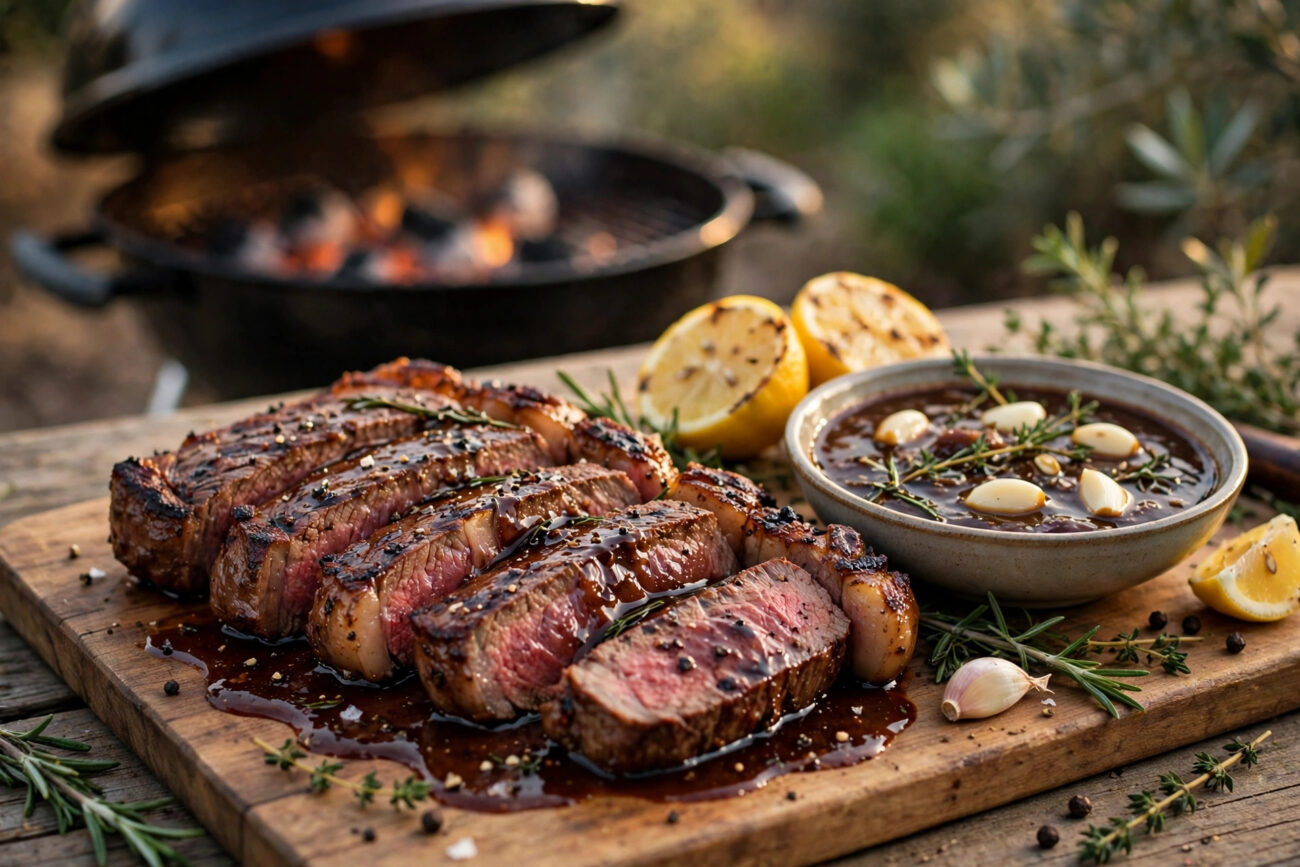
A great steak does not need a complicated recipe, but it does need the right marinade. The best steak marinade recipes for grilling share one simple idea: a balance of oil, acid, salt, and sweetness that flavors the surface and helps it brown on the grill. Get that balance right, and even a budget cut like flank steak turns juicy and full of flavor. Get it wrong, and the meat ends up bland or mushy on the outside.
In this guide: one base formula, six variations, a cut-by-cut timing chart, and the safety rules most recipe pages skip, all built for a home grill with ingredients you probably already have.
What Makes a Great Steak Marinade?
A marinade has three jobs: it adds flavor to the surface, its oil carries that flavor and helps the steak sear instead of steam, and its salt and acid season the outer layer so the first bite tastes seasoned through.
What a marinade does not do is soak deep into the meat. Flavor from a marinade only travels a few millimeters into the surface. That is why marinades work best on thinner, coarse-grained cuts like flank, skirt, and sirloin, where a lot of surface area meets the grill. A thick, well-marbled ribeye or a tender filet mignon needs no help, and a long soak can do more harm than good.
The best base formula follows a simple ratio: roughly equal parts oil, acid, and salty umami. Olive oil keeps the steak moist and helps with browning. Lemon juice or vinegar adds brightness and tenderizes the surface. Soy sauce brings salt and deep savory flavor, and garlic, sugar, and black pepper round it out. Once you know this base, you can change the flavor by swapping one or two ingredients, which is how the six variations below work.
The Best Steak Marinade Recipe for Grilling
This is the base recipe everything else here builds on. It makes about 1 cup, enough for about 2 pounds of steak, or roughly 1/2 cup per pound. Whisk it in a bowl, pour it over the steak in a zip-top bag or shallow dish, and refrigerate.
Ingredients:
- 1/3 cup soy sauce
- 1/3 cup olive oil
- 1/3 cup fresh lemon juice
- 4 cloves garlic, minced
- 2 tablespoons brown sugar
- 1 teaspoon black pepper
Steps:
- Whisk the soy sauce, olive oil, and lemon juice together until combined.
- Stir in the garlic, brown sugar, and black pepper until the sugar dissolves.
- Place the steak in a zip-top bag or shallow dish and pour the marinade over it, turning once to coat both sides.
- Seal the bag, press out the extra air, and refrigerate for 2 to 8 hours.
- Before grilling, remove the steak from the marinade, discard the used marinade, and pat the steak very dry with paper towels.
Keeping these six ingredients on hand is easy with an organized kitchen. Our guide to how to organize a small pantry on a budget shows how to group sauces, oils, and spices so a marinade like this takes five minutes to mix.
6 Steak Marinade Variations for Every Flavor
Each variation below changes the flavor with just a few swaps. Pick one that fits your cut and mood, then follow the same method: whisk, pour, refrigerate, pat dry, grill.
| Variation | Flavor profile | What changes from the base | Best cut |
|---|---|---|---|
| Classic garlic herb | Bright, savory, herby | Add 2 tablespoons chopped rosemary and thyme, swap lemon juice for red wine vinegar | Sirloin, strip steak |
| Teriyaki | Sweet, salty, glossy | Add 2 tablespoons honey and 1 teaspoon grated ginger, swap lemon juice for rice vinegar | Flank, skirt |
| Chimichurri style | Fresh, tangy, garlicky | Add 1/4 cup chopped parsley, 1 tablespoon red wine vinegar, a pinch of red pepper flakes | Skirt, hanger |
| Bourbon brown sugar | Smoky, sweet, rich | Add 2 tablespoons bourbon and 1 extra tablespoon brown sugar, use Dijon mustard instead of pepper | Ribeye (1 hour max), sirloin |
| Coffee pepper | Dark, bold, earthy | Add 1 tablespoon finely ground coffee and 1 teaspoon smoked paprika | Flat iron, chuck steak |
| Bulgogi style | Sweet, sesame, savory | Add 1 tablespoon sesame oil, 1 grated Asian pear or 2 tablespoons sugar, and 2 sliced green onions | Flank, thin-sliced sirloin |
Two notes before you pick. Sweet marinades burn faster, so watch teriyaki and bourbon versions closely and keep the heat at medium-high. Delicate herbs like parsley hold their color better if you add half at the start and sprinkle the rest on the finished steak.
How Long to Marinate Steak by Cut
Timing matters more than the recipe itself. Too short, and the marinade barely flavors the surface. Too long, and the acid breaks down the outer layer until it turns mushy and mealy, almost like ceviche. The sweet spot for most cuts is 2 to 8 hours in the fridge, 30 minutes gives some flavor in a rush, tough cuts can go up to 12 hours, and 24 hours is the absolute maximum.
| Cut | Best time | Maximum time | Why |
|---|---|---|---|
| Flank steak | 4 to 8 hours | 12 hours | Lean and coarse-grained, benefits most from marinating |
| Skirt steak | 2 to 4 hours | 8 hours | Thin, soaks up flavor fast, turns mushy if left too long |
| Sirloin | 2 to 8 hours | 12 hours | Balanced cut, handles the full sweet spot well |
| Hanger steak | 2 to 4 hours | 8 hours | Rich flavor already, needs only a short soak |
| Flat iron | 2 to 6 hours | 12 hours | Tender but lean, marinade adds moisture and flavor |
| Ribeye | 30 minutes to 1 hour | 2 hours | Well marbled, long soaks hide its natural flavor |
| Filet mignon | Do not marinate | Do not marinate | Too tender and lean, acid damages the texture |
Fruit-based marinades need a special warning. Pineapple, kiwi, and papaya contain enzymes that break down meat far more aggressively than citrus or vinegar, so they must stay under 30 minutes. An hour in fresh pineapple juice leaves the surface soft and grainy in a way no grilling can fix.
Marinade Safety Rules You Should Never Skip
Marinades touch raw meat, so food safety is part of the recipe. Follow these five rules every time.
Always marinate in the fridge. Never leave steak in marinade on the counter for more than 60 minutes, since bacteria grow fast at room temperature.
Never reuse marinade that touched raw meat. Once it has touched raw steak, it carries the same bacteria as the meat. If you want a sauce, set aside a portion of the fresh marinade before you pour the rest over the steak. The only other safe option is to boil the used marinade vigorously for at least 5 minutes, which kills the bacteria but changes the flavor.
Take the steak out 20 to 30 minutes before grilling. A fridge-cold steak cooks unevenly, with a gray band under the surface, so letting it warm up slightly gives a more even cook.
Pat the steak very dry. A wet surface steams instead of searing, and the sugar burns before a crust can form. Paper towels are the difference between a brown crust and a gray, steamed exterior.
Cook to a safe temperature. The USDA safe minimum for whole beef steaks is 145 F with a 3-minute rest, while medium-rare is about 135 F. See the USDA safe temperature chart for full detail. A simple instant-read thermometer is the most reliable way to hit your target, and it costs less than one ruined steak.
Which Steaks to Marinate and Which to Skip
Marinating is not for every cut. The winners are the lean, coarse-grained cuts: flank, skirt, sirloin, hanger, and flat iron. They have plenty of surface area, less internal fat, and a texture that benefits from acid and salt. A marinated flank steak, sliced thin against the grain, is one of the best value meals you can grill.
The cuts to skip are filet mignon and thick, well-marbled ribeye. Filet is already the most tender cut, and acid only damages its fine texture. Ribeye has so much internal fat that its flavor needs nothing but salt, pepper, and heat, so keep any marinade under an hour.
Thickness matters too. Steaks under an inch thick take flavor quickly, so use the shorter end of the timing chart. Very thick cuts are usually better with a dry brine of salt overnight than with a wet marinade at all.
How to Grill a Marinated Steak
Good marinating is only half the job. Here is the grilling sequence that turns a well-marinated steak into a great one.
- Preheat the grill to about 450 F and clean the grates well, since marinade residue and sugar burn onto dirty grates fast. If your grill has stainless steel parts, our guide to how to clean stainless steel appliances without streaks covers the same gentle approach for steel surfaces.
- Oil the grates lightly with a paper towel dipped in high-smoke-point oil, held with tongs.
- Place the patted-dry steak on the hottest part of the grill and leave it alone for 4 to 5 minutes per side for a 1-inch steak at medium-rare.
- Flip only once if you can. Every extra flip cools the surface and slows the crust.
- Move the steak to a cooler part of the grill if flare-ups start, since sugar in the marinade catches fire easily.
- Rest the steak for 5 minutes before slicing, and always slice against the grain for the most tender bite.
Resting is not optional. Cut into a steak straight off the grill and the juices run onto the board. Wait five minutes and they settle back into the meat, which is the difference between a dry slice and a juicy one.
Frequently Asked Questions
How long should I marinate steak?
Thirty minutes is the minimum, 2 to 8 hours is the sweet spot, and 24 hours is the absolute maximum. Tough, lean cuts like flank can go up to 12 hours, while thin cuts like skirt should stop at 4 hours.
What is the best steak marinade for grilling?
The best all-purpose marinade is the base formula in this guide: equal parts soy sauce, olive oil, and lemon juice, with garlic, brown sugar, and black pepper. From there, pick a variation that fits your steak: teriyaki or bulgogi for flank, chimichurri for skirt, and classic garlic herb for sirloin.
Can I reuse steak marinade?
No, not as it is. Marinade that touched raw meat carries bacteria, so it must be boiled vigorously for at least 5 minutes before it is safe as a sauce, and boiling changes the flavor. Better habit: set aside a small portion of the fresh marinade before you pour the rest over the steak.
What happens if I marinate steak too long?
The acid keeps breaking down the surface until the outer layer turns soft, mushy, and mealy. This is worst with fruit juices like pineapple, kiwi, and papaya, which work much faster than other acids. A steak marinated too long cannot be fixed by grilling.
Which steaks should I marinate and which should I not?
Marinate lean, coarse-grained cuts like flank, skirt, sirloin, hanger, and flat iron. Skip filet mignon, which is too tender for acid, and keep ribeye to an hour at most. When in doubt, a shorter soak is safer than a longer one.
Should I marinate steak at room temperature?
No. Always marinate in the fridge. Steak left in marinade on the counter for more than 60 minutes enters the range where bacteria grow quickly. The only time out of the fridge is the 20 to 30 minutes before grilling, after the steak is out of the marinade and patted dry.
Related Reading
Conclusion
The best steak marinade recipes for grilling all start from the same place: equal parts oil, acid, and salty umami, plus garlic, sugar, and pepper. Learn that base, match the timing to your cut, pat the steak dry, and follow the safety rules, and the grill will do the rest. For more marinade ideas, see the roundup at The Manual. Pick one variation from the table for your next cookout, and you will taste the difference a good marinade makes.
