
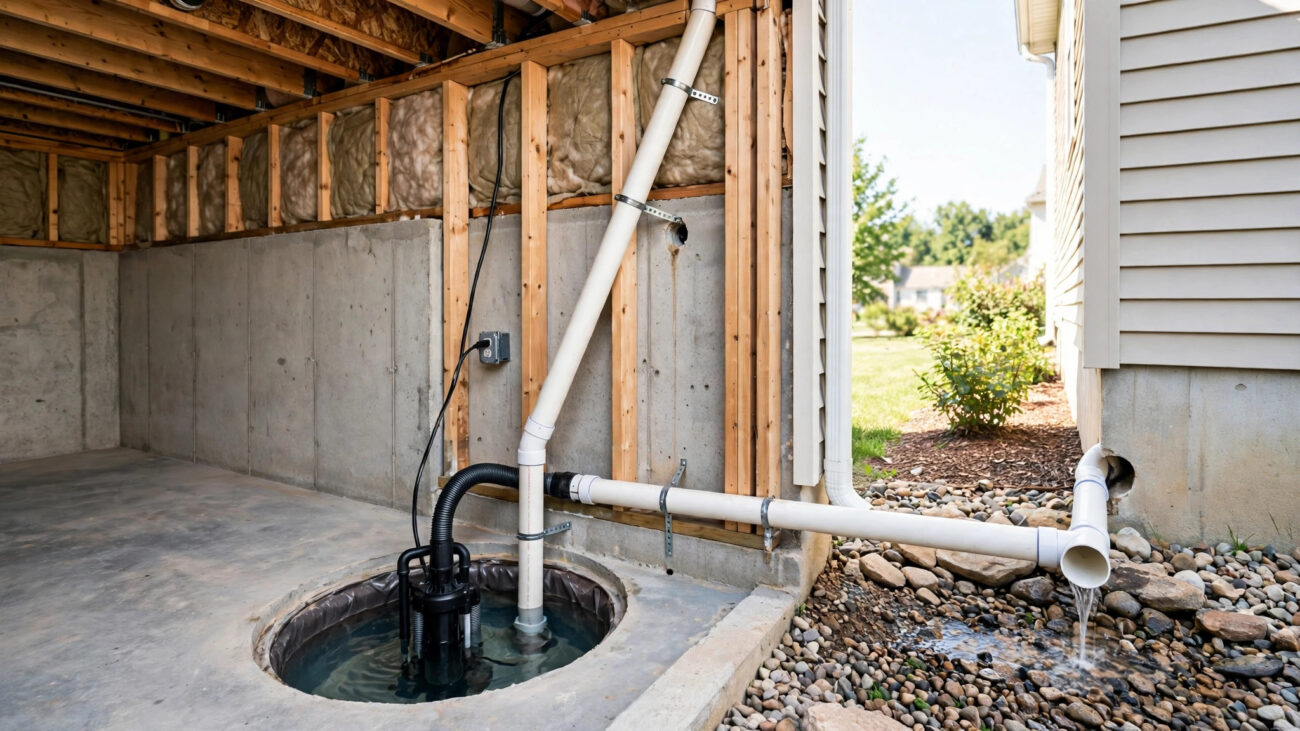
A wet basement is one of the most expensive problems a home can develop, and a sump pump is the device that stops it. If you are wondering how much does it cost to install a sump pump, the short answer for 2026 is $800 to $2,500 for a new installation, with a national average near $1,100, according to Angi 2026 data. Replacing a pump in a pit that already exists is much cheaper, usually $400 to $900. The single biggest price driver is whether a pit already exists in your basement floor.
This guide explains the cost of every scenario, from a simple replacement to a new pit with a battery backup, and it covers the choice between pedestal and submersible pumps, the DIY question, and the running costs most quotes leave out. By the end, you will know what a fair quote looks like for your home and what to ask before you sign.
How Much Does It Cost to Install a Sump Pump in 2026?
For a brand-new installation, most US homeowners pay $800 to $2,500, and the typical range Angi reports is $800 to $1,500, with an average of about $1,100. That figure covers the pump, the basin, the discharge pipe, and a licensed plumber’s labour for a standard job in a basement where the work is straightforward.
The price climbs when the job gets harder. Cutting a new pit through a concrete floor adds $300 to $800, and concrete work adds 10 to 15 percent to the labour. A battery backup system adds $300 to $700. A high-capacity pump, a second pump, or a long discharge run to a suitable outlet can push the total toward $3,500 to $4,000. At the other end, replacing a failed pump in a pit that already exists is a two to four hour job that usually costs $400 to $700 for the pump and labour, or $400 to $900 for a higher-end unit.
Labour is a large share of the bill. Plumbers typically charge $50 to $150 per hour, with $60 to $95 per hour common for this work. A replacement takes two to four hours. A new installation with excavation takes a full day. Regional prices vary widely, so a quote from a local plumber who has seen your basement is the only number that truly applies.
Sump Pump Cost by Scenario
Your home’s situation decides the price far more than the pump’s brand. These are the scenarios plumbers see most often.
| Scenario | Typical Cost | What Is Included |
|---|---|---|
| Replace pump, pit exists | $400 to $900 | New pump, check valve, testing, old pump removal |
| New install, pit exists | $800 to $1,500 | Pump, basin, discharge pipe, electrical outlet, labour |
| New install, new pit cut | $1,000 to $2,500 | All of the above plus concrete cutting and excavation |
| New install with battery backup | $1,500 to $3,500 | Pump plus battery, charger, and alarm system |
| High-end or dual-pump system | $2,500 to $4,000 | Two pumps, backup, alarm, and heavy-duty discharge |
| DIY replacement only | $300 to $800 | Pump and parts only, no labour |
The scenario table explains why two neighbours can get very different quotes for what sounds like the same job. One has a pit and an outlet already in place. The other needs concrete cut, a pit dug, a drain run, and an electrician. Ask the plumber which scenario your home is in before you compare prices, because comparing a replacement quote with a new-install quote is meaningless.
Pedestal vs Submersible Sump Pumps
There are two main types of sump pump, and the choice affects both the price and how long the pump lasts.
Pedestal pumps cost $400 to $900 installed. The motor sits on a long shaft above the water, with only the impeller at the bottom of the pit. They are easy to service, they last a long time, often up to 25 years, and you can hear them running, which some homeowners like. The downside is noise, and they are less powerful than submersible models, so they suit basements with light to moderate water.
Submersible pumps cost $600 to $1,800 installed. The whole unit sits in the pit, underwater, sealed in a waterproof housing. They are quieter, more powerful, and better at handling heavy water and small debris. They cost more, and because the motor is submerged, they tend to have a shorter life than pedestal pumps, though a good unit still lasts many years.
For most homes with a real flooding risk, a submersible pump is the better choice. For a basement that only gets damp in heavy rain, a pedestal pump is a fair, cheaper option. Your plumber can advise based on how much water your pit collects in a storm.
How Much Is a Sump Pump by Itself?
The pump unit alone costs $100 to $800, depending on power and quality. A basic 1/3 horsepower pedestal pump can cost under $150. A good 1/3 horsepower submersible pump, which moves up to 2,000 gallons per hour, typically costs $200 to $400. A 1/2 or 3/4 horsepower submersible pump for a home with heavy water flow costs $400 to $800.
The unit price is only part of the job. The basin, check valve, discharge pipe, fittings, and electrical work add several hundred dollars to a new installation, and labour is often half the total. That is why a $250 pump can still be part of a $1,200 job, and why a DIY replacement, where you buy only the pump, can cost $300 to $800 in parts.
Do not buy the cheapest pump you can find. A sump pump is the one device that stands between your basement and thousands of dollars of water damage. A mid-range pump from a known brand, with a solid warranty, is a far better investment than a bargain unit that fails in the first big storm.
Do I Need a Battery Backup?
Yes, in most cases, and the reason is simple: the storms that flood basements are the same storms that cut the power. A sump pump that needs mains electricity stops working exactly when you need it most. A battery backup keeps the pump running through an outage, and it is the single most valuable add-on you can buy.
A battery backup system costs $300 to $700, or $350 to $800 for a larger setup, and it includes the battery, a charger, and an alarm that sounds when the backup is running. The battery itself needs replacing every 3 to 5 years, which costs $100 to $250. Some systems also include a water-powered backup that runs on mains water pressure, but these use a lot of water and are banned in some municipalities, so check local rules first.
Even if outages are rare where you live, a backup is worth it for one more reason: it covers pump failure. A dual-pump system, with a second pump set slightly higher in the pit, takes over if the main pump fails or cannot keep up. For a finished basement with flooring, furniture, and electronics, that redundancy is cheap insurance.
Can I Install a Sump Pump Myself?
Replacing a pump in an existing pit is a realistic DIY job for a handy homeowner. It takes two to four hours, needs basic tools, and involves swapping the old pump for a new one, fitting a check valve, and testing the system. The parts cost $300 to $800, and you save the labour charge.
Installing a new sump pump from scratch is a different matter. It means cutting through a concrete floor, digging a pit, laying gravel, running a discharge pipe to a suitable outlet, and adding a dedicated electrical circuit. Most homeowners hire a professional for this, and for good reason: a mistake in the discharge routing or the electrical work can flood the basement or create a safety hazard.
One rule is absolute: never discharge sump water into the sanitary sewer. It is illegal in most US municipalities, it can overload the sewer system, and it can earn you a fine. The discharge should go to a storm drain, a dry well, or a spot in the yard at least 10 to 20 feet from the foundation, where the water flows away from the house rather than back toward it.
Running Costs and How Long a Sump Pump Lasts
A sump pump costs very little to run. It only switches on when water rises in the pit, so electricity use is modest, usually a few dollars a month even in a wet season. The real ongoing costs are maintenance and replacement parts.
Test the pump every few months by pouring a bucket of water into the pit and checking that it switches on, pumps the water out, and switches off. Clean the pit once a year, check the discharge pipe for blockages, and make sure the float switch moves freely. A pump that runs constantly may have a stuck float or a failed check valve, and both are cheap fixes if caught early.
How long a pump lasts depends on the type and how hard it works. Pedestal pumps can last up to 25 years. Submersible pumps usually last 7 to 15 years, less in a basement that floods often. Batteries need replacing every 3 to 5 years. If your pump is over 10 years old, start budgeting for a replacement, and test it before every rainy season.
FAQs About Sump Pump Installation Cost
How much does it cost to install a sump pump in 2026?
A new installation costs $800 to $2,500, with an average near $1,100. Replacing a pump in an existing pit costs $400 to $900. Adding a battery backup adds $300 to $700, and cutting a new pit through concrete adds $300 to $800.
How much is a sump pump by itself?
The unit alone costs $100 to $800. A basic pedestal pump is at the low end, a good 1/3 horsepower submersible pump costs $200 to $400, and a larger 1/2 or 3/4 horsepower model costs $400 to $800. The basin, pipe, fittings, and labour are separate costs.
Do I need a battery backup?
Yes, in most homes. Flooding storms often cut the power, and a pump without power is useless when you need it most. A battery backup costs $300 to $700, runs the pump through an outage, and the battery needs replacing every 3 to 5 years.
Can I install a sump pump myself?
You can replace a pump in an existing pit yourself if you are handy, and the parts cost $300 to $800. A new installation with a pit to cut, a discharge pipe to run, and an electrical circuit to add is usually a professional job. Never discharge sump water into the sanitary sewer.
How long does a sump pump last?
Pedestal pumps last up to 25 years, and submersible pumps last 7 to 15 years depending on how hard they work. Batteries last 3 to 5 years. Test the pump every few months and replace it before it fails in a storm, not after.
Conclusion
Installing a sump pump costs $800 to $2,500 for a new system in 2026, or $400 to $900 to replace a pump in a pit that already exists. The pit, the pump type, and the battery backup are what decide the price, so ask any plumber for an itemised quote that shows each part separately. A battery backup is worth the extra $300 to $700, because the storms that flood basements are the ones that cut the power. And if your basement has ever taken water, do not wait for the next storm to find out whether your pump still works.
