
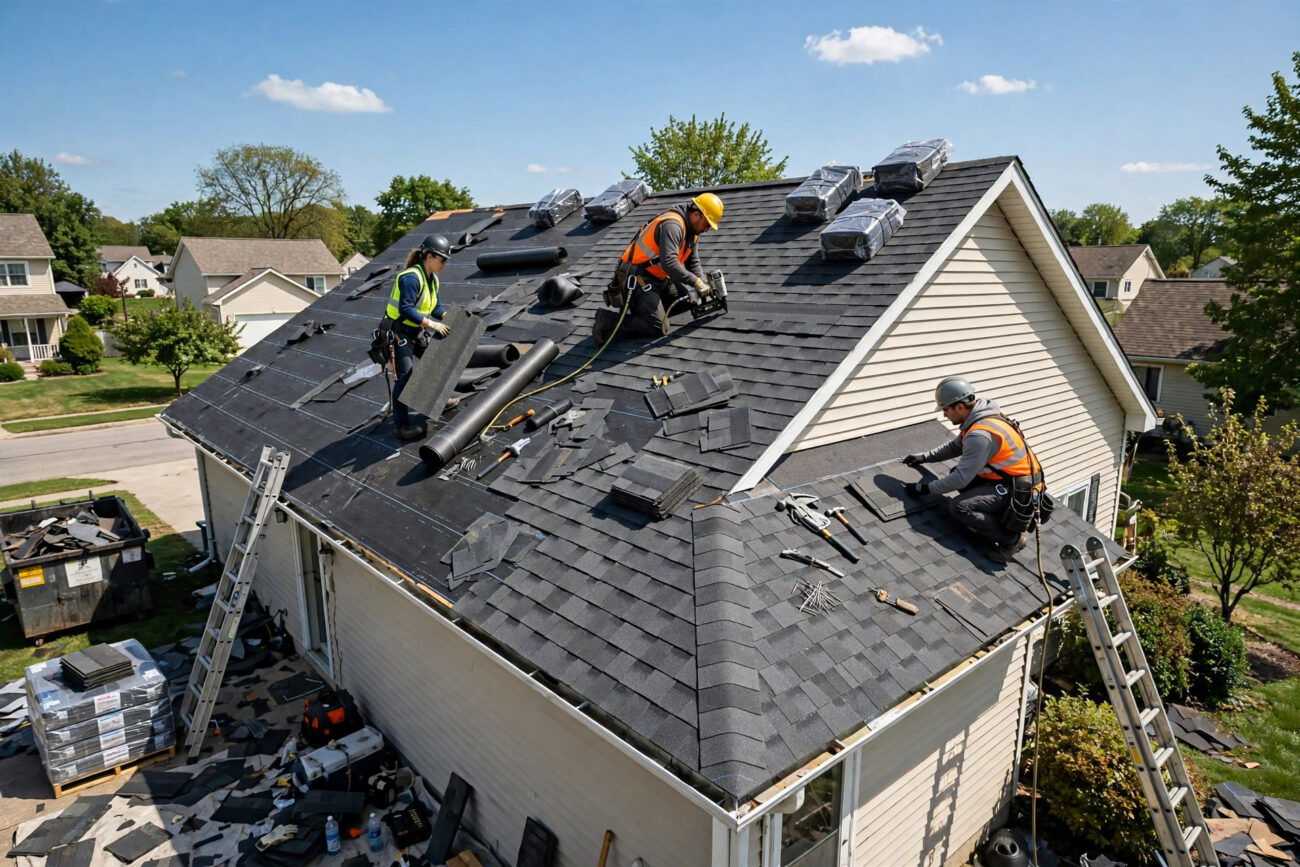
A roof is the most expensive single component of most homes to replace, and it is also the one homeowners think about least until it starts leaking. So how much does a roof replacement cost? In 2026, the national average is about $9,611, with most homeowners paying between $5,903 and $13,380, based on tens of thousands of verified projects. That works out to roughly $4 to $11 per square foot installed, depending on your material, your roof’s size and pitch, and where you live. This guide explains the cost by material and by size, what is included in the price, when a repair is enough, and how to avoid overpaying.
All figures below are typical 2026 US ranges from published cost guides such as Angi and HomeAdvisor, and they are planning benchmarks, not quotes for your home. Roofing is priced by the “square,” one square equals 100 square feet of roof surface, and most quotes will show a per-square price alongside the total. The ranges here will help you judge whether an estimate is fair before you sign a contract.
What Is a Roof Replacement?
A roof replacement, also called a re-roof, means removing the old roofing down to the deck, inspecting and repairing the deck if needed, installing new underlayment, flashing, and shingles or other roofing material, and finishing with ridge caps and ventilation. It is different from a roof repair, which fixes a small area, and from an overlay, where new shingles are laid over the old ones. An overlay is cheaper upfront but hides problems underneath, adds weight, and usually voids the manufacturer’s warranty, so most reputable roofers recommend a full tear-off.
A full replacement is the right call when the roof is near the end of its lifespan, when leaks appear in several places, when shingles are curling, cracking, or missing across large areas, or when the deck underneath is soft or sagging. If the damage is limited to one small area and the roof is otherwise young and sound, a repair is usually the smarter spend.
How Much Does a Roof Replacement Cost in 2026?
The national average of about $9,611 hides a wide range, because roofs vary so much. The single biggest factor is material. Asphalt shingles, the most common choice in the United States, are also the cheapest. Metal, tile, and slate cost two to six times as much installed, but they also last two to three times longer. The table below shows typical 2026 installed prices, including labor and a full tear-off of one old layer.
| Material | Cost per sq ft installed | Cost per square (100 sq ft) | Typical lifespan |
|---|---|---|---|
| 3-tab asphalt shingles | $3 to $5 | $300 to $500 | 15 to 20 years |
| Architectural shingles | $4 to $7 | $400 to $700 | 25 to 30 years |
| Metal roofing | $8 to $15 | $800 to $1,500 | 40 to 70 years |
| Wood shake | $6 to $12 | $600 to $1,200 | 20 to 40 years |
| Clay or concrete tile | $9 to $25 | $900 to $2,500 | 50 years or more |
| Slate | $15 to $30 | $1,500 to $3,000 | 75 to 100 years |
For a typical 2,000-square-foot roof, that means roughly $6,000 to $14,000 for asphalt shingles, $16,000 to $30,000 for metal, and $30,000 to $60,000 for tile or slate. Most American homes have asphalt shingles, and most quotes you receive will be for architectural shingles, which cost a little more than 3-tab but last about 10 years longer and look considerably better. Independent 2026 cost roundups such as WhatHomeCosts’ roof replacement guide put the same national picture at $5,900 to $14,000 for a typical asphalt job, with an average near $9,600 to $10,000.
Roof Replacement Cost by Size
Roof area is usually 1.1 to 1.2 times the home’s floor area on a moderate pitch, because the roof is sloped and includes overhangs. A steeper roof has more surface area than a shallow one covering the same house, which is one reason steep roofs cost more. Typical 2026 totals for asphalt shingle roofs, installed with a full tear-off, look like this:
- 1,000 sq ft roof (small home): $4,000 to $7,000
- 1,500 sq ft roof: $6,000 to $10,500
- 2,000 sq ft roof (average home): $8,000 to $14,000
- 2,500 sq ft roof: $10,000 to $17,500
- 3,000 sq ft roof (large home): $12,000 to $21,000
These ranges assume architectural shingles at $4 to $7 per square foot. Premium materials multiply the total, and complex roofs with many valleys, dormers, skylights, and chimneys add labor hours on top. Each skylight or chimney means extra flashing work, and each valley means extra cutting and sealing, so two houses with the same roof area can easily get quotes $2,000 apart.
What Affects Roof Replacement Cost?
Roof pitch. Steep roofs cost more because crews work slower, need safety equipment, and waste more material on cuts. A low-slope roof is the cheapest to replace; a very steep roof can add 15 to 25 percent to the labor bill.
Tear-off and disposal. Removing and hauling away the old roof typically costs $1,000 to $2,000, or about $1 to $2 per square foot. A second layer of old shingles, which some older homes have, adds another layer of cost. Some quotes bury this in the per-square price, so always ask whether tear-off and disposal are included.
Decking repairs. Once the old shingles are off, the crew can see the deck underneath. Rotted or damaged decking must be replaced, usually at $2 to $5 per square foot for the affected area, and this is the most common surprise charge on a roofing job. A good contract states the per-sheet price for decking replacement upfront, so there are no arguments mid-job.
Underlayment, flashing, and ventilation. These are not optional extras, they are part of a proper roof. New underlayment, drip edge, flashing around chimneys and vents, and ridge ventilation typically add $500 to $2,000 to the job, and skipping them is how cheap roofs fail early. If you have a chimney, a chimney sweeping before the roofing work starts is a sensible step, since soot and debris complicate flashing work.
Permits and location. Most cities require a roofing permit, typically $150 to $500, and labor rates vary widely by region. Prices have risen 8 to 12 percent in recent years as shingle manufacturers raised prices and steel and aluminum tariffs pushed up flashing and metal panels, so a quote from 2023 is no guide to a 2026 price.
Labor share. Labor typically makes up 40 to 60 percent of the total bill, which is why getting three quotes from local, licensed roofers matters more for roofing than for almost any other home project. The cheapest quote is not always the best, but the most expensive is rarely justified either, and a spread of more than 20 percent between quotes usually means the scopes are not the same.
Roof Repair vs Replacement: Which Is Right?
A repair makes sense when the damage is limited, the roof is less than 15 years old, and the deck is sound. A typical repair costs $300 to $1,500, for example replacing a section of wind-damaged shingles or resealing flashing around a vent. If your roof leaks in one spot after a storm and the shingles elsewhere look fine, repair it and keep the money.
Replacement makes sense when the roof is over 20 years old for asphalt shingles, when you have patched the same area more than once, when shingles are curling, buckling, or losing granules across the whole roof, or when the deck is sagging. There is a simple rule many roofers use: if repairs would cost more than about a third of a replacement, replace it. Paying for a third repair on a roof that will need replacing in two years is the most expensive option of all.
Does Homeowners Insurance Cover Roof Replacement?
It depends on why the roof failed. Damage from a sudden event, such as a hailstorm, windstorm, or a tree falling, is usually covered, minus your deductible. Damage from age, wear, or neglected maintenance is not covered. Insurers also pay differently depending on your policy: a replacement-cost policy pays for a new roof, while an actual-cash-value policy pays only the depreciated value of the old roof, which can leave you covering half the bill yourself. Our guide to flood insurance coverage explains a related gap in standard policies, since water damage from a storm is often covered differently than water damage from flooding. If a storm damaged your roof, document the damage with photos before any repairs, file the claim quickly, and get an adjuster out before you sign a roofing contract. Some roofing companies offer to handle the claim for you, which can be convenient, but you should still get an independent quote so you know the real price.
How to Lower Your Roof Replacement Cost
Schedule the work in late winter or early spring, when roofers have open calendars and sometimes offer off-season pricing. Get at least three written quotes with the same scope, same material, and same warranty, and compare them line by line. Choose architectural shingles over 3-tab: they cost about 20 percent more but last about 50 percent longer, which makes them cheaper per year. Ask whether the quote includes tear-off, disposal, underlayment, flashing, and permits, so a low headline price does not turn into change orders. And check whether your manufacturer warranty requires a certified installer, since using one can extend the warranty from 25 years to 50 years at little extra cost.
Roof Replacement FAQs
How long does a roof replacement take?
Most asphalt shingle replacements on an average home take one to three days. Larger homes, steep pitches, tile or slate, and deck repairs can stretch the job to a week or more. Weather is the usual delay: roofers will not tear off a roof they cannot re-cover before rain.
How often should a roof be replaced?
Asphalt shingle roofs last 15 to 30 years depending on the shingle type and your climate. Metal lasts 40 to 70 years, tile 50 years or more, and slate up to 100 years. Harsh sun, hail, and poor ventilation shorten every material’s life, so the real answer is to inspect your roof every year and replace it when the signs say so, not on a fixed calendar.
Can you stay home during a roof replacement?
Yes, most homeowners do. Expect loud noise from about 7 a.m., vibrations through the house, and dust in the attic. Keep cars out of the driveway, cover items in the attic, and keep pets and children away from the work area. If you work from home, plan to work elsewhere for the noisiest day.
What is the cheapest roof to replace?
3-tab asphalt shingles are the cheapest, at $3 to $5 per square foot installed, or roughly $5,000 to $8,000 for a typical home. Architectural shingles cost a little more but are usually the better value, since they last about 10 years longer for roughly 20 percent more money.
Does a new roof increase home value?
Yes, a new roof typically recovers 60 to 70 percent of its cost in resale value, and it makes a home much easier to sell, since buyers and their inspectors treat an old roof as a looming expense. A new roof with a transferable warranty is a genuine selling point, especially in storm-prone markets.
How much does a roof replacement cost per square foot?
Typically $4 to $11 per square foot installed for common materials, or $400 to $1,100 per roofing square. Asphalt shingles are at the low end at $3 to $7 per square foot, while metal runs $8 to $15 and tile or slate runs $9 to $30 or more.
Conclusion
A roof replacement costs about $9,611 on average in 2026, with most homeowners paying $5,903 to $13,380 for an asphalt shingle roof, or $4 to $11 per square foot installed. Material is the biggest cost driver, followed by roof size, pitch, and the condition of the deck underneath. Get three quotes with identical scopes, make sure tear-off, underlayment, flashing, and permits are included, and time the job for the off-season if you can. A roof is a 25-year purchase, so the cheapest quote is only a bargain if the work lasts.
