
A slow drain is annoying. A fully blocked drain is a mess, and a plumber visit can cost more than the problem deserves. The good news is that most household clogs can be cleared with simple tools and a little patience. This guide on how to unclog a drain without calling a plumber shows you how to work out what kind of clog you have, then climb the method ladder from the gentlest fix to the strongest, so you only call a professional when you actually need one.
You will learn how to diagnose a local clog versus a main line problem, which tool to use for each type of drain, what never to mix or pour down a drain, and the warning signs that mean it is time to stop and call a plumber. Most of the methods below cost little or nothing, and the whole job usually takes less than an hour.
What Causes a Clogged Drain?
Kitchen drains usually clog with grease and food. Hot grease goes down the drain as a liquid, cools in the pipe, and hardens into a sticky layer that catches food particles. Over months, that layer narrows the pipe until water drains slowly or stops altogether. Bathroom drains clog differently. Hair is the main culprit, especially in showers and tubs, where it combines with soap scum to form a dense mat that water cannot pass through.
Toilet clogs are usually caused by too much paper, or by items that should never have been flushed, such as wipes, cotton pads, or sanitary products. Even wipes labelled flushable can cause problems, because they do not break down the way toilet paper does. Outdoor and laundry drains can clog with leaves, lint, and soap residue, but the methods in this guide cover the indoor drains most people deal with first.
Knowing the cause helps you pick the right fix. Grease responds to hot water and soap. Hair needs to be pulled out, not dissolved. A paper blockage needs pressure from a plunger. Using the wrong method wastes time and can make the clog worse, so diagnose first, then act.
Diagnose the Clog First
Before you touch a tool, work out where the problem is. This one step decides whether the job is a simple DIY fix or a plumber job.
If only one drain is slow, the clog is local, in that drain or the pipe just below it. A slow bathroom sink, a slow shower, or a slow kitchen sink on its own is a DIY job in most cases. If several drains are slow at the same time, especially on the lowest floor of the house, the problem is likely in the main line, and you should call a plumber. The same applies if water backs up into a tub when you flush the toilet, or if you smell sewage. Those are main line symptoms, not a local clog.
Run a simple test. Fill the slow sink halfway with water and watch how it drains. If it drains slowly but steadily, the blockage is partial and the gentler methods below may clear it. If the water does not move at all, the blockage is more solid, and you may need to go further up the ladder. If the water level rises in another fixture when you run this one, stop and call a plumber, because the blockage is deeper than your tools can reach.
The Method Ladder: Gentlest to Strongest
Work through these methods in order. Start with the gentlest, and only move to the next one if the first did not work. Jumping straight to a strong chemical cleaner can damage your pipes and makes later methods dangerous.
1. Boiling Water and Dish Soap
This is the best first step for a kitchen sink clogged with grease. Squirt a good amount of dish soap into the drain, then pour boiling water in two or three stages, waiting a few seconds between pours. The soap breaks down grease, and the hot water carries it away. This method costs nothing and works well on light grease buildup.
Do not use boiling water on PVC pipes in poor condition, and never pour boiling water into a toilet. For older plastic pipes, use very hot tap water instead. If the sink drains a little faster after this step, repeat it once more before moving on.
2. The Cup Plunger
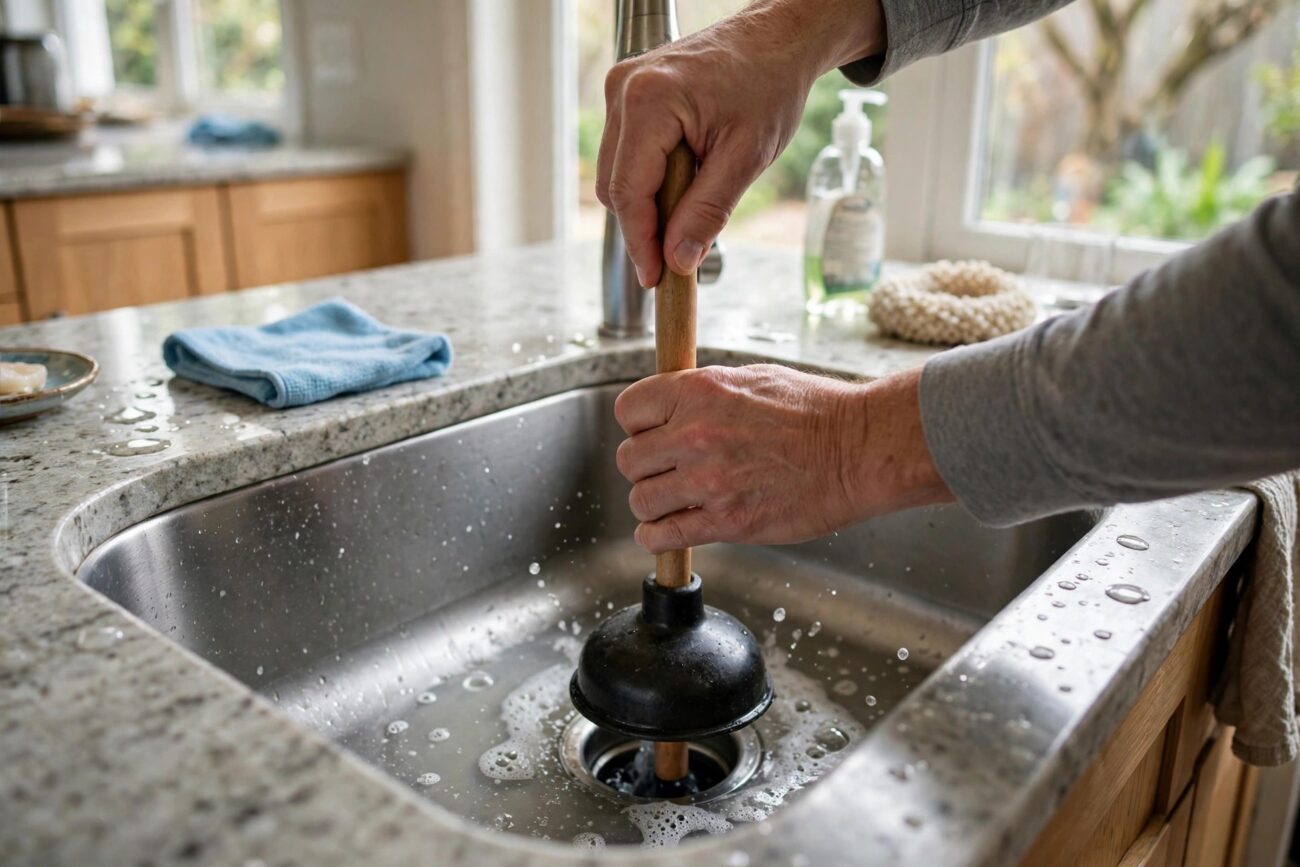
For sinks and tubs, use a cup plunger, the simple rubber cup on a stick. A flanged plunger is for toilets only, so do not use it on a sink. First, block the overflow hole with a wet cloth or tape, so the pressure goes down the drain instead of out of the overflow. Add enough water to cover the plunger cup, place it firmly over the drain, and push up and down with steady, strong strokes for 20 to 30 seconds.
Check whether the water drains. If it does, run hot water for a minute to flush the loosened material away. If it does not, repeat the plunging twice more. Plunging works by pressure, so a good seal matters more than force. If air is leaking around the cup, adjust the angle and try again.
3. Baking Soda and Vinegar
Pour half to one cup of baking soda into the drain, followed by the same amount of vinegar. Cover the drain and wait 15 to 30 minutes, then flush with hot water. The fizzing reaction can loosen light buildup and clear odours, and it is safe for most pipes.
Be honest about what this method can do. It helps with light buildup and smells, but it will not dissolve a hair mat or clear a solid blockage. If your drain is fully blocked, this step will not fix it, and you should move on to the next method instead of repeating it again and again.
4. A Hair Wand or Zip It Strip
For bathroom drains, this is often the method that actually works. A hair wand, sometimes sold as a Zip It strip, is a thin plastic strip with small barbs that you push into the drain and pull back out, bringing a clump of hair with it. It costs about $4 to $20, it takes minutes, and it works on the exact clogs that hot water and baking soda cannot touch.
Push the strip in slowly, twist it gently, and pull it out. Repeat two or three times until it comes out clean. Wear gloves, because what comes out is unpleasant. Then run hot water for a minute to flush the drain. This is the best first method for a slow shower drain, and many people skip straight to it after trying hot water.
5. A Drum Auger
A 25 foot drum auger, also called a drain snake, is a coiled cable you feed into the drain and turn by hand to break up or hook a deeper clog. A basic hand auger costs about $25, and it can reach clogs that a plunger and a hair wand cannot. Feed the cable in slowly, turn the handle, and when you feel resistance, work the cable back and forth to break the clog apart.
Never run a snake through a drain you have just poured chemical cleaner into, because the cleaner can splash back and burn your skin and eyes. If you have already used a chemical cleaner, wait, flush the drain thoroughly with water, and wear eye protection and gloves before you snake it. For most homeowners, an auger is the last DIY step before calling a plumber.
6. Remove and Clean the P Trap
The P trap is the U shaped bend under your sink, and it catches a surprising amount of debris. Cleaning it takes about 15 minutes and costs nothing. Place a bucket under the trap, unscrew the slip nuts by hand or with pliers, and let the water drain into the bucket. Remove the trap, clean out the debris, rinse it, and put it back, tightening the nuts by hand and then a quarter turn with pliers.
Check for leaks by running water for a minute. If the trap was the problem, the sink will drain normally again. Take a photo before you take it apart, so you can see how it fits back together. If the nuts are corroded or the trap is cracked, replace the trap instead of forcing it, since a new plastic trap costs only a few dollars.
How Much Does It Cost?
Most DIY methods cost very little, which is the whole point of trying them first. A plumber visit is the expensive option, and knowing the typical prices helps you decide when it is worth calling one.
| Method | Typical cost | Best for |
|---|---|---|
| Boiling water and dish soap | Free | Kitchen grease, light buildup |
| Cup plunger | $5 to $15 | Sinks, tubs, partial blockages |
| Baking soda and vinegar | $2 to $5 | Light buildup and odours |
| Hair wand or Zip It strip | $4 to $20 | Shower and tub hair clogs |
| Drum auger, 25 foot | About $25 | Deeper clogs past the trap |
| Plumber drain cleaning | $150 to $300 typical, up to $600 | Main line, sewage, stubborn clogs |
Plumber prices vary by city and by time of day. Emergency or weekend calls cost more, sometimes double the normal rate. If your clog can wait until a weekday morning, you will usually pay less. Get the price in writing before the work starts, and ask whether the visit fee is included or extra.
What Never to Do
Chemical drain cleaners deserve caution. Caustic cleaners can damage pipes, especially older ones, and they are dangerous to handle. Never mix chemical drain cleaners, because mixing them can create toxic gas. Never use a plunger or a snake right after pouring a chemical cleaner in, because it can splash back. If you do use a chemical cleaner, treat it as a last resort, follow the label exactly, and wear gloves and eye protection.
Never flush wipes, cotton pads, sanitary products, or paper towels down a toilet, even if the packaging says flushable. Never pour cooking grease down a kitchen drain. Let it cool, pour it into a container, and throw it in the trash. Never ignore a sewage smell or a backup in more than one fixture. Those are not DIY problems, and waiting makes them worse and more expensive.
How to Prevent Future Clogs
Prevention is cheaper than any fix. In the kitchen, scrape plates into the trash before washing, and never pour grease down the drain. In the bathroom, fit a hair catcher over the shower drain and clean it weekly. It costs a few dollars and stops most hair clogs before they start.
Once a month, flush each drain with hot water for a minute. Once every few months, clean the P trap on the kitchen sink if you cook a lot. Teach everyone in the house what can and cannot go down a drain, especially children and guests. A small habit change now saves a plumber bill later.
FAQs
What is the fastest way to unclog a drain?
For a kitchen sink, boiling water with dish soap is fastest for grease. For a bathroom sink or shower, a hair wand is usually fastest, because it pulls the hair clog out in minutes. A cup plunger is the fastest option for a toilet or a sink blocked by paper.
Does baking soda and vinegar really work?
It works on light buildup and odours, but it will not dissolve a hair mat or clear a full blockage. Use it for maintenance and light clogs, and move on to a hair wand, a plunger, or an auger for a real blockage.
Which plunger should I use?
Use a cup plunger for sinks, tubs, and showers, and a flanged plunger for toilets. The cup shape seals flat drains, while the flange shape seals the curved toilet bowl outlet. Using the wrong one gives a poor seal and weak pressure.
How do I unclog a shower drain?
Start with a hair wand or Zip It strip, which pulls the hair clog out directly. Follow it with hot water for a minute. If that does not work, try a cup plunger, and then a drum auger for a deeper clog.
When should I call a plumber?
Call a plumber if several drains are slow at once, if sewage backs up or you smell sewage, if water rises in another fixture, or if the clog does not clear after two or three DIY tries. These signs point to a main line problem that needs professional tools.
Are chemical drain cleaners safe?
They are corrosive and can damage pipes, especially older ones. Never mix them, and never use a plunger or snake right after pouring one in. Treat them as a last resort only, follow the label exactly, and wear gloves and eye protection.
Conclusion
Most clogs are local, and most local clogs can be cleared without a plumber. Diagnose first, then climb the ladder: hot water and soap for grease, a plunger for pressure, a hair wand for bathroom hair, and an auger or a clean P trap for deeper blockages. Know the signs that mean stop, especially multiple slow drains and sewage smells, and call a professional when you see them. With a hair catcher and a monthly hot water flush, you may not need to unclog a drain again for a long time.
Related Reading: How Much Does It Cost to Replace a Water Heater, How Much Does Water Damage Restoration Cost
