
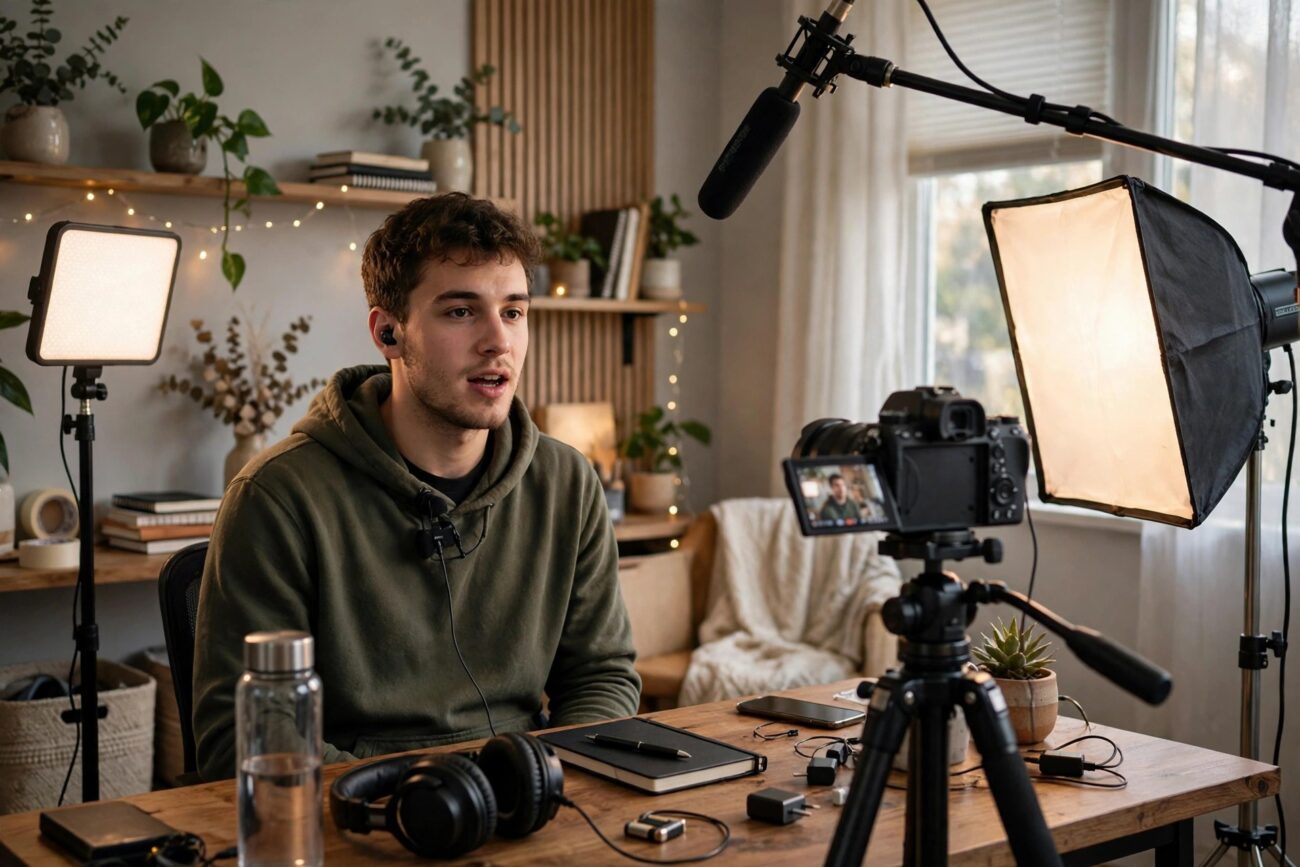
Every month, thousands of people start a YouTube channel hoping to earn money, and most of them quit before they earn a single dollar. The reason is rarely a lack of talent. It is a lack of a realistic plan. This guide on how to make money on YouTube as a beginner explains the real requirements, the real income sources, and a first 90 days plan that actually works, so you can start earning without waiting for a viral video.
You will learn the two tiers of the YouTube Partner Program, how much creators really earn per thousand views, why AdSense is the minority of real creator income, and how affiliates, services, and digital products can earn money from day one. No hype, no promises of overnight riches, just the numbers and the steps.
How YouTube Pays Creators
YouTube pays creators through the YouTube Partner Program, known as YPP. Once you are accepted, YouTube places ads on your videos and shares the revenue with you. For long form videos, the split is 55 percent to the creator and 45 percent to YouTube. For Shorts, the creator share is 45 percent, because Shorts ads work differently and the revenue is pooled.
That ad revenue is measured as RPM, or revenue per thousand views. RPM varies widely by niche, by audience location, and by season. In English speaking markets, RPM typically runs from $2 to $20 per thousand views. A finance channel can earn $18 to $45 CPM, which is the cost advertisers pay per thousand ad impressions, while a gaming or entertainment channel may earn under $2 RPM. The same million views can therefore be worth $2,000 in one niche and $20,000 in another, which is why niche choice matters so much.
Ad revenue is only one income source, and for most creators it is not the biggest one. Sponsorships, affiliate links, and your own products usually earn far more than ads, and they can start long before you qualify for the Partner Program. Understanding this early changes your whole strategy, because you stop chasing views for their own sake and start building an audience that trusts your recommendations.
YouTube Partner Program Requirements
YouTube now has two tiers, and the lower tier is the one most beginners should aim for first. Fan funding opens at 500 subscribers, plus three public uploads in the last 90 days, plus either 3,000 watch hours in the last 12 months or 3 million Shorts views in the last 90 days. At this tier, you can earn from channel memberships, Super Chat, Super Thanks, and Shopping, but you do not yet earn ad revenue.
Full ad revenue opens at 1,000 subscribers, plus either 4,000 watch hours in the last 12 months or 10 million Shorts views in the last 90 days. At this tier, you earn from ads on long form videos and Shorts, as well as all the fan funding features. You also need to follow YouTube community guidelines and monetisation policies, and you need an AdSense account linked to your channel.
Verify these numbers on the official YouTube Partner Program page before you rely on them, because YouTube changes its rules from time to time. One change to watch for: some sources report that from 1 February 2027, new full YPP applicants may need 1,000 subscribers plus either 8,000 watch hours in 365 days or 20 million Shorts views in 90 days. This is reported, not confirmed as current, so check the official page and date any claim you make about it clearly. Do not present it as the current rule.
Ways to Make Money on YouTube
There are five main income sources for a beginner, and the smartest creators use several of them at once.
- Ad revenue: Earns money once you reach full YPP. It is passive, but slow to grow, and it pays the least per viewer in most niches.
- Affiliate links: You recommend a product and earn a commission when a viewer buys through your link. This can start from day one, with no subscriber minimum, and it works well in how to, tech, and finance niches.
- Sponsorships: A brand pays you to feature their product in a video. Small channels can earn sponsorships from $100 to $500 per video, while larger channels earn far more. Sponsors care about your audience, not just your subscriber count.
- Services and freelancing: Your channel proves your skill, and viewers hire you for that skill. A design, editing, coaching, or consulting service can earn more in a month than a year of ad revenue for a small channel.
- Digital products: Courses, templates, ebooks, and presets that you create once and sell again and again. This is the income source that scales best, because it does not depend on views or sponsors.
Most creators earn 60 to 80 percent of their income from sponsorships, affiliates, and their own products, not from AdSense. That is the most important fact in this guide. If you build your channel around one of those income sources from the start, you can earn money long before you reach 1,000 subscribers.
Which Niche Pays Best?
Niche choice affects both your RPM and your other income options. Finance, business, tech, and how to channels pay the best, because advertisers in those niches pay more to reach buyers, and because viewers in those niches buy products and services. A finance video can earn ten times the RPM of an entertainment video with the same views.
| Niche | Typical RPM | Best extra income |
|---|---|---|
| Finance and investing | $15 to $45 | Affiliates, courses, sponsorships |
| Tech and software | $8 to $25 | Affiliates, sponsorships |
| How to and education | $5 to $20 | Courses, templates, services |
| Health and fitness | $4 to $15 | Affiliates, coaching, products |
| Gaming | $1 to $5 | Memberships, sponsorships, merch |
| Entertainment and vlogging | Under $2 | Brand deals, merch |
These are typical ranges, not promises. Your RPM depends on your audience location, the season, and the advertisers bidding for your viewers. A channel with a US audience earns more than the same channel with an audience in a lower paying market, and December RPM is usually higher than January RPM because advertisers spend more before the holidays.
Choose a niche you can stick with for a year, not just the highest paying one. A finance channel you abandon after a month earns nothing. A gaming channel you love and publish on twice a week for a year can earn real money through memberships, sponsorships, and your own products, even with a low RPM.
Your First 90 Days Plan
The first 90 days are about learning and building a habit, not about going viral. A realistic plan looks like this.
Days 1 to 30: Pick your niche and your audience. Decide who you are helping and what problem you solve. Set up your channel with a clear name, a simple banner, and an about section that says what viewers will learn. Publish 8 to 12 videos, each solving one clear problem, and keep them short, 8 to 12 minutes for long form, or under 60 seconds for Shorts. Do not worry about perfect production. Clear audio and a clear point matter more than a fancy camera.
Days 31 to 60: Look at your analytics and double down on what works. Which videos got the most watch time? Which titles got the most clicks? Make more of those, and stop making the ones nobody watched. Start adding affiliate links to your descriptions where they fit naturally, and mention them in the video. Reply to every comment, because early viewers who feel seen become loyal subscribers.
Days 61 to 90: Publish consistently, at least twice a week, and start thinking about a product or service. A simple checklist, a template, or a one hour consultation can be your first product. You do not need a big audience to sell it. Ten buyers at $20 is $200, which is more than most small channels earn from ads in a month.
By day 90, a consistent beginner can realistically reach a few hundred subscribers and a few thousand views per video, with a small affiliate income starting to appear. That is normal progress, not failure. The creators who earn a living from YouTube are usually the ones who kept going past day 90, when most people quit.
How Long Does It Take to Earn Meaningful Money?
For most beginners, reaching full YPP takes 6 to 18 months of consistent publishing. Meaningful monthly income, enough to matter rather than just a few dollars, usually arrives in months 6 to 18 as well, and it usually comes from affiliates, services, or products before it comes from ads.
Your timeline depends on your niche, your upload frequency, and how well you learn from your analytics. A creator publishing twice a week in a high paying niche will reach YPP faster than a creator publishing once a month in a low paying niche. A creator who studies their retention graph and improves each video will grow faster than one who repeats the same mistakes.
Set honest expectations. In your first three months, you will likely earn little or nothing. In months four to six, affiliate income may start to appear. In months six to twelve, sponsorships and your own products may start to matter. The creators who treat YouTube as a one year project, not a one month project, are the ones who succeed.
Common Beginner Mistakes to Avoid
- Chasing viral videos: One viral video brings subscribers who never watch again. A steady stream of useful videos brings subscribers who stay.
- Copying big creators: Their audience, budget, and style are different from yours. Learn from them, but make videos in your own voice.
- Ignoring the first 30 seconds: Viewers decide whether to stay in the first half minute. State the promise of the video early, and deliver on it fast.
- Publishing irregularly: One video a month makes it hard for YouTube to know who your audience is. Twice a week, even with simpler videos, works better.
- Waiting for perfect equipment: A phone, good light, and clear audio are enough to start. Upgrade when your income justifies it, not before.
- Breaking the rules: Reused content, misleading titles, and copyrighted material can block monetisation. Read the YPP policies before you publish.
FAQs
How much money can a beginner make on YouTube?
Realistically, little for the first few months, then income grows with your audience and your other income sources. A small channel in a high paying niche can earn a few hundred dollars a month from affiliates and services before it ever reaches full YPP, while ad revenue alone is usually small until you pass 10,000 views per video regularly.
What are the requirements to earn in 2026?
Fan funding opens at 500 subscribers plus three public uploads in 90 days and either 3,000 watch hours in 12 months or 3 million Shorts views in 90 days. Full ad revenue needs 1,000 subscribers plus either 4,000 watch hours in 12 months or 10 million Shorts views in 90 days. Verify these on the official Partner Program page, since rules change.
How many subscribers do you need?
You need 500 subscribers for fan funding features such as memberships and Super Chat, and 1,000 subscribers for ad revenue. Affiliates, services, and digital products have no subscriber minimum, so you can earn from those from day one.
Can you make money without AdSense?
Yes. Affiliates, services, digital products, and sponsorships can all earn money without AdSense, and for most creators they earn far more than ads. Many beginners earn their first dollars from an affiliate link or a small service, not from ad revenue.
Which niche pays best?
Finance, tech, and how to niches pay best, with RPMs of $8 to $45 per thousand views, while gaming and entertainment pay under $2 to $5. Choose a niche you can publish in consistently for a year, because consistency matters more than RPM alone.
How long does it take?
Reaching full YPP usually takes 6 to 18 months of consistent publishing, and meaningful monthly income usually arrives in the same window. Creators who publish twice a week and learn from their analytics get there faster than creators who publish rarely.
Conclusion
Making money on YouTube as a beginner is a slow build, not a lottery ticket. Aim for fan funding at 500 subscribers, then full YPP at 1,000, and build affiliate, service, or product income alongside your ads from day one. Pick a niche you can stick with, publish twice a week, study your analytics, and give it a full year. The creators who earn a living from YouTube are rarely the most talented ones. They are the ones who kept going after day 90, when everyone else stopped.
Related Reading: How to Use ChatGPT to Write a Resume, How to Transcribe Audio to Text with AI Free
